Product Description
Features
- Wide range and high precision of temperature control device to support the combinations of non-standard test conditions
- 6 test stations can perform specimen test or blank test simultaneously
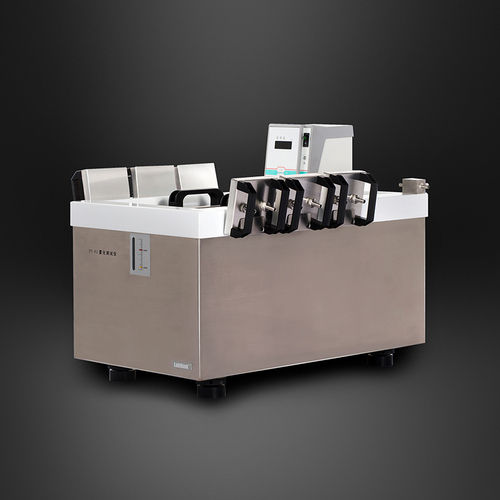
- FT-F1 fogging tester ensures accurate and reliable test data through stable running condition
Test Principle
The preconditioned specimen is heated and evaporates in the beaker; the volatile constituents condense on the glass plate or aluminum foil treated in cooling chamber. Take off the glass plate or aluminum foil when the condensation process is finished. The fogging characteristics could be obtained by measuring condensed constituent weight and fogging value on the glass plate or aluminum foil and comparing with the data before condensation process.
Test Standards
This instrument conforms to the multiple international and national standards:
ISO 6452, DIN 75201, SAE J1756, QB/T 2728, BS EN 14288, PV 3920, PV 3015, ES-X83231, NES M0161, D45 1727, GM 9305P, TSM 0503G
Three Test Methods
Gloss Method: the specimen is heated in the beaker and its volatile constituents are condensed on the cooling glass plate. The fogging value could be obtained by calculating and comparing the gloss values occurred before and after condensation process.
Haze Method: the specimen is heated in the beaker and its volatile constituents are condensed on the cooling glass plate. The fogging value of the specimen could be obtained by calculating and comparing the fogging values occurred before and after condensation process.
Weighing Method: the specimen is heated in the beaker and its volatile constituents are condensed on the cooling aluminum foil. The fogging value - the weight of condensed constituents could be obtained by analyzing the weight changes of aluminum foil occurred before and after condensation process.
Instrument Structure
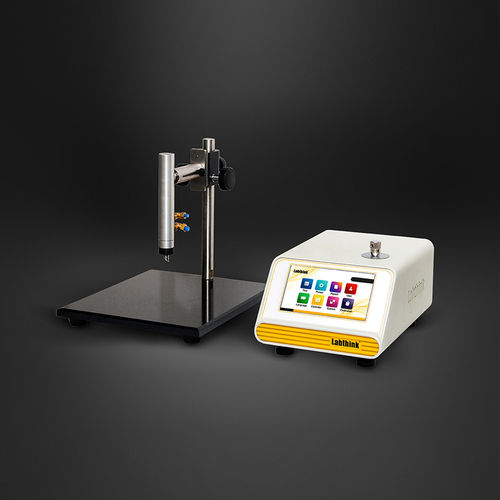
The instrument mainly consists of constant high-temperature bath, constant low-temperature bath, cooling plate, beaker, glass plate, meter, sample cutter and other accessories, through which it can perform the processes of sampling, heating, condensation and test.
Operation Process
Prepare specimens-----switch on high and low temperature baths-----clean beakers and glass plates------place specimens----place glass plate or aluminum foil-----place cooling chamber-----perform test for a specified period of time----take off glass plate or aluminum foil and place certain time----measure the gloss value, fogging value of glass plate or weight value of aluminum foil------compare the data and obtain test results
Applications
FT-F1 fogging tester is applicable to the determination of:
| Basic Applications |
- Decorating Articles of Cars
Test the volatility of car decorating articles, e.g. instrument boards, knobs, seat cushions, floor leather and ceiling materials at high temperature
|
- Plastic Particles
Test the volatility of plastic particles at high temperature
|
| Extended Applications |
- Carpets
Test the volatility of carpets at high temperature
|
- Leather
Test the volatility of leather at high temperature
|
- Sponge, Rubber and EPE Thermal Insulation Materials
Test the volatility of sponge, rubber and EPE thermal insulation materials at high temperature
|
- High Intensity Discharge Lamps
For the fogging test of front high intensity discharge lamps of cars
|
- Adhesive Products
Test the volatility of adhesive products at high temperature
|
Technical Specifications
| Specifications |
FT-F1 Fogging Tester |
| Temperature Range of High-Temperature Bath |
Room temperature 150C
(room temperature 280C is optional) |
| Accuracy |
0.1C (150C) |
| Temperature Range of Low-Temperature Bath |
0 100C |
| Accuracy |
0.1C |
| Size of High-Temperature Bath |
670 mm (L) x 490 mm (W) x 540 mm (H) |
| Size of Low-Temperature Bath |
400 mm (L) x 220 mm (W) x 520 mm (H) |
| Net Weight of High-Temperature Bath |
32 kg (except the weight of heat conducting medium) |
| Net Weight of Low-Temperature Bath |
15 kg (except the weight of heat conducting medium) |
| Power Supply |
220VAC 50Hz / 120VAC 60Hz |
Configurations
- Standard Configurations
- Instrument, Constant Temperature Control Device, Gloss Meter, Sample Clamp Ring, Beaker, Fluorine Rubber O-ring, Rubber Fixing Ring, Rectangular Glass Plate, Round Glass Plate, Aluminum Foil, Round Sample Cutter of Aluminum Foil, Lid, Stand of Glass Plate, Round Sample Cutter and Accessory Stand
- Optional Parts
- Haze Meter, Analytical Balance(0.01mg), Beaker, Fluorine Rubber O-ring, Rectangular Glass Plate, Round Glass Plate, Aluminum Foil, Round Sample Cutter of Aluminum Foil, Stand of Glass Plate, Heating Fluid, DIDP and DOP
Advanced Safety Assurance for Non-Metal Car InteriorsThis instrument is designed to rigorously test the safety and combustion resistance of non-metal car interior materials. Its automatic control, high-precision flame measurement, and robust stainless steel chamber make it a reliable solution for complying with international automotive safety standards. The intuitive touch panel and digital readout enhance accuracy and user experience, while built-in safety features promote operator security during every test cycle.
Optimized for Laboratory Efficiency and ReliabilityFeaturing programmable settings, automatic timing, and multiple specimen holders, the instrument facilitates simultaneous, repeatable testing of up to three samples. Its high-tolerance design, corrosion-resistant structure, and user-friendly controls ensure dependable performance year after year. The printer and USB export functions allow seamless documentation and data sharing, supporting modern laboratory workflow requirements.
FAQ's of Testing Instrument for the Safety and Performance of Non-Metal Cars Interior Materials:
Q: How does the instrument ensure accurate safety and combustion testing for car interior materials?
A: The instrument uses electronic automatic ignition, precise manual flame adjustment with a graduated scale, and a high-purity test gas (propane, butane, or mixed gases). With a timer accuracy of 0.01 s and compliance with GB 8410, ISO 3795, and FMVSS 302, it provides consistent, reliable results.
Q: What is the recommended process for operating the testing instrument?
A: Begin by preparing up to three specimens (356 100 mm) and placing them in the specimen holders. Set the required parameters via the touch panel, start the automatic ignition, and observe the test through the tempered glass window. The programmable system handles timing and data collection, outputting reports via printout or USB export.
Q: When should calibration be performed on this instrument?
A: It is recommended to perform annual calibration to maintain measurement accuracy within the 1% range. Calibration ensures reliable data output and prolonged equipment service life, especially during regular laboratory usage.
Q: Where is this instrument best utilized?
A: Designed for laboratory environments, the instrument is ideal for use by automotive manufacturers, suppliers, exporters, and quality control departments. It operates optimally in controlled settings with temperatures between 5C and 40C and 40%-85% relative humidity.
Q: What are the safety features built into the instrument?
A: The instrument incorporates a built-in alarm system and over-temperature cutoff to prevent overheating. Observation is performed through a tempered glass window, minimizing risk during combustion testing. Additionally, the stainless steel chamber resists corrosion and enhances operational safety.
Q: How does the instrument benefit automotive manufacturers and suppliers?
A: By enabling quick, accurate, and programmable flame resistance testing, the instrument helps manufacturers and suppliers meet global safety standards, accelerate product development, and ensure customer safety. Data export capabilities streamline compliance documentation and quality traceability.
Q: What control and data interface options are available?
A: The instrument offers a modern touch panel for user control and supports standard interfaces, including USB and RS232, for flexible data management. Automatic report generation through printout or USB export supports convenient archiving and sharing of test results.
 English
 Spanish
 French
 German
 Italian
 Chinese (Simplified)
 Japanese
 Korean
 Arabic
 Portuguese










 Send Inquiry



