Product Description
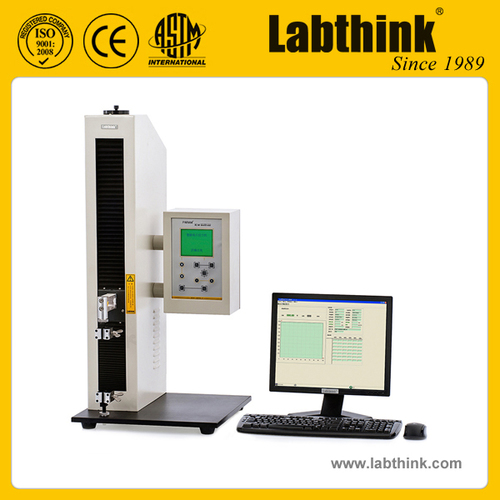
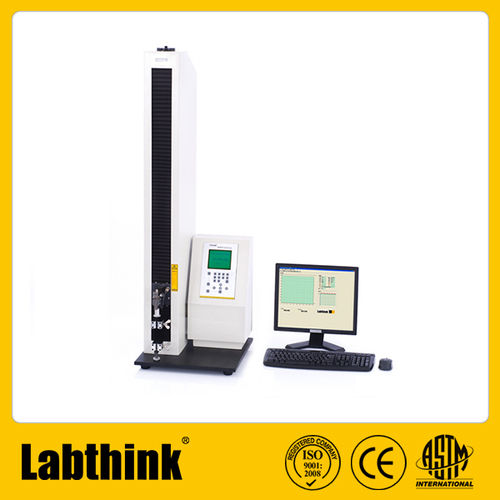
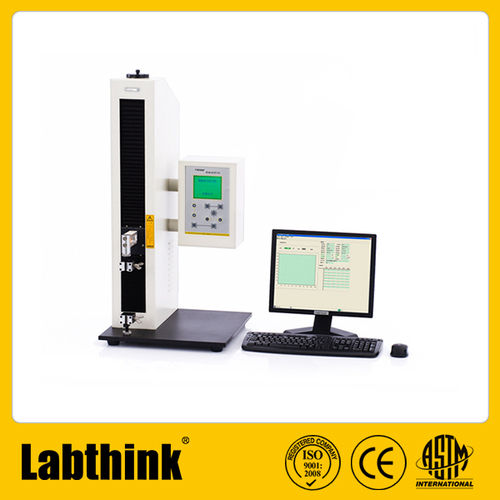
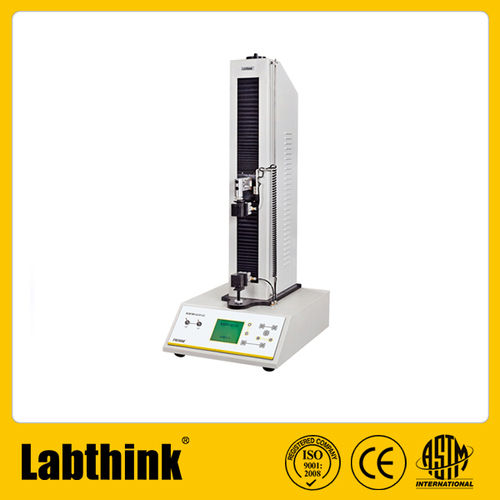
Tension Testing Machine
XLW Series Auto Tensile Testers: are for the peeling, tensile, heal seal and tearing tests of films, laminated films, adhesives and tapes.
This series of products includes XLW / XLW B/XLW M/XLW ECand XLW.
They can test materials of plastic films, laminated materials, flexible packaging materials, plastic flexible tube, adhesives, adhesive tapes, pressure sensitive tapes, adhesive bandage (plaster), release paper, protective films, flip off cap, foil, diaphragm, back sheet, non-woven, rubber, and paper fiber, etc.
Technical Specification
| Specifications | XLW |
| Load Cell Capacity | 500 N (standard) 30 N, 50 N, 100 N, 200 N (optional) |
| 750 N, 1000 N (Customization Available) |
| Accuracy | 1% FS |
| Test Speed | 50, 100, 150, 200, 250, 300, 500 mm/min |
| Number of Specimens | 1 |
| Specimen Width | 30 mm (Standard Grip) |
| 50 mm (Optional Grip) |
| Clamping Way | Manual Specimen Clamp |
| Stroke | 500 mm |
| Instrument Dimension | 450 mm (L) x 450 mm (W) x 980 mm (H) |
| Power Supply | 220VAC 50Hz / 120VAC 60Hz |
| Net Weight | 65 kg |
Precision and Versatility for Material TestingEngineered for flexibility, the Tension Testing Machine supports a broad load measuring range with a fine resolution of 0.01 kN. Customizable capacity fits various industrial requirements, from research labs to manufacturing units. Its sturdy welded steel frame ensures durability, while options for self-centering or manual grips accommodate different specimen geometries.
Safety and User-Friendly OperationEquipped with overload protection and an emergency stop switch, the machine prioritizes operator safety. The digital controls, clear display, and adjustable crosshead speed guarantee straightforward operation and accurate readings. Maintenance is simplified by reliable stainless-steel housing and intuitive interface, suiting labs and factories alike.
Comprehensive Data Management and ConnectivityWith a digital display and versatile output optionsUSB, RS232, or Ethernetthe system enables efficient data management and integration into modern test environments. Included accessories like standard grips and extensometers streamline setup, ensuring compliance with major international testing standards.
FAQs of Tension Testing Machine:
Q: How does the Tension Testing Machine measure tensile strength?
A: The machine stretches a material specimen using adjustable crosshead speeds, measuring the applied load and the resulting extension with high precision. Data is displayed digitally and can be output via USB, RS232, or Ethernet for further analysis.
Q: What materials and standards can this machine test?
A: The Tension Testing Machine is suitable for metals, polymers, and composites, accommodating various forms and thicknesses. It is compliant with ASTM, IS: 1608, IS: 1828, and equivalent international standards, ensuring reliable and standardized test results.
Q: When should calibration or maintenance be performed?
A: Routine calibration and maintenance should be performed periodically, typically every 6 to 12 months, depending on usage intensity and company policy. Regular checks ensure ongoing accuracy (1% of indicated load) and reliable operation.
Q: Where is this machine typically installed?
A: Due to its robust construction and approximate dimensions (1200 mm x 600 mm x 1800 mm, ~500 kg), the machine is commonly installed in research laboratories, industrial quality control departments, or manufacturing facilities requiring precise tensile testing capabilities.
Q: What is the process for connecting the machine to a PC or data system?
A: Connection is straightforward using the provided USB, RS232, or Ethernet interfaces. After linking the machine to your computer or network, compatible software can be used for real-time monitoring, recording, and analysis of test data.
Q: How do the safety features enhance operator protection?
A: Safety features such as overload protection and the emergency stop switch are essential for preventing damage to the equipment and ensuring the operators safety in unexpected situations.
Q: What are the main benefits of using this tension testing machine?
A: Users benefit from precise measurements, robust construction, easy controls, comprehensive safety, and seamless integration with data systemsmaking it ideal for high-efficiency material testing and analysis across industries.
 English
 Spanish
 French
 German
 Italian
 Chinese (Simplified)
 Japanese
 Korean
 Arabic
 Portuguese











 Send Inquiry



