Product Description
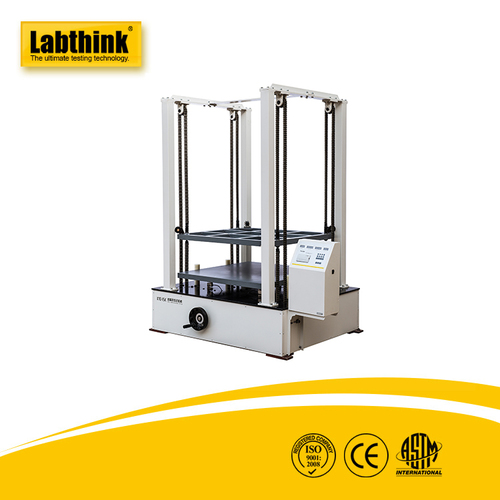
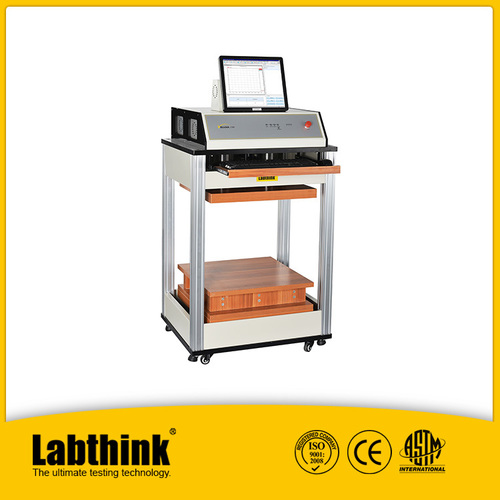
Carton Compression Testing Instrument
Compressive strength is the capacity of a material to withstand loads tending to reduce size. For finished packages, compression test can be used to measure compressive resistance, deformation and stacking capability.
Our offered Carton Compression Testing Instrument is used to measure the compressive resistance, deformation and stacking capability of cartons, beehive crates, plastic tanks (for edible oil and mineral water), paper tanks, paper cases, IBC tanks and other packages.
4 testing modes are available : deformation under defined load, load under defined deformation, maximum load and stack tests
Technical Specification
| Specifications | XYD-15K |
| Load Cell Capacity | 15 KN or 45 KN (Optional) |
| Accuracy | 1% FS |
| Force Resolution | 1 N |
| Deformation Resolution | 0.1 mm |
| Test Speed | 5 mm/min, 10 mm/min, 12.7 mm/min |
| Test Space | 1 m (L) x 1 m (W) x 1.3 m (H) |
| Power Supply | 220VAC 50Hz / 120VAC 60Hz |
| Instrument Dimension | 1.2 m (L) x 1.5 m (W) x 2.3 m (H) |
| Net Weight | 800 kg |
Versatile Testing with Customizable Plate SizeThis instrument accommodates diverse carton sizes by offering a large, customizable 1000 mm x 1000 mm compression plate. Users can test a variety of packaging materials efficiently, making it suitable for several industry requirements.
Dual Test Method: Computerized & ManualBenefit from flexible testing modes-choose between user-friendly computerized operation for advanced data handling, or manual control for straightforward assessments. This adaptability makes the device ideal for both R&D and routine quality checks.
Comprehensive Safety and Data OutputEquipped with safety features like emergency stop and overload protection, this machine prioritizes user security. Data can be conveniently exported through USB or printer ports, supporting thorough record-keeping and quality traceability.
FAQ's of Carton Compression Testing Instrument:
Q: How is the carton compression test conducted using this instrument?
A: The carton compression test is executed by placing the carton sample on the large compression plate. The plate then applies an adjustable load-up to 5000 kg-at a controlled speed, with pressure and deformation measured digitally. The computerized or manual modes facilitate flexibility during testing.
Q: What carton sizes and maximum sample heights can this machine test?
A: This instrument supports cartons up to 1000 mm in height and accommodates various base dimensions, owing to its spacious 1000 mm x 1000 mm compression plate. The plate size can also be customized to suit specific requirements.
Q: When should overload protection and emergency stop features be used?
A: The overload protection automatically activates if the applied load exceeds safe limits, safeguarding both the equipment and the operator. The emergency stop is intended for immediate interruption in case of any abnormal operation or safety concern.
Q: Where are the test results displayed and how can I export the data?
A: Test results are displayed in real time on the digital display of the machine. For thorough documentation, data can be exported via the built-in USB port or directly connected printer, providing detailed test records for analysis or quality control.
Q: What industries and applications benefit most from using this compression tester?
A: Primarily, packaging and logistics industries gain from this instrument, ensuring carton boxes meet required compression strength standards. Manufacturers, exporters, and suppliers across China and globally rely on it for quality assurance and compliance.
Q: How do I adjust the test speed and load according to my sample needs?
A: Test speed and load parameters are adjustable through the microprocessor-based control system, allowing users to set precise conditions tailored to varying materials or testing standards. This ensures optimal accuracy during each assessment.
Q: What are the recommended operating conditions for this instrument?
A: For accurate results and equipment longevity, operate the tester in environments between 10C to 40C with relative humidity up to 85% (non-condensing), and use a stable 220V AC, 50 Hz power supply.
 English
 Spanish
 French
 German
 Italian
 Chinese (Simplified)
 Japanese
 Korean
 Arabic
 Portuguese







 Send Inquiry


