Product Description
Featuresnote1
Batch Testing
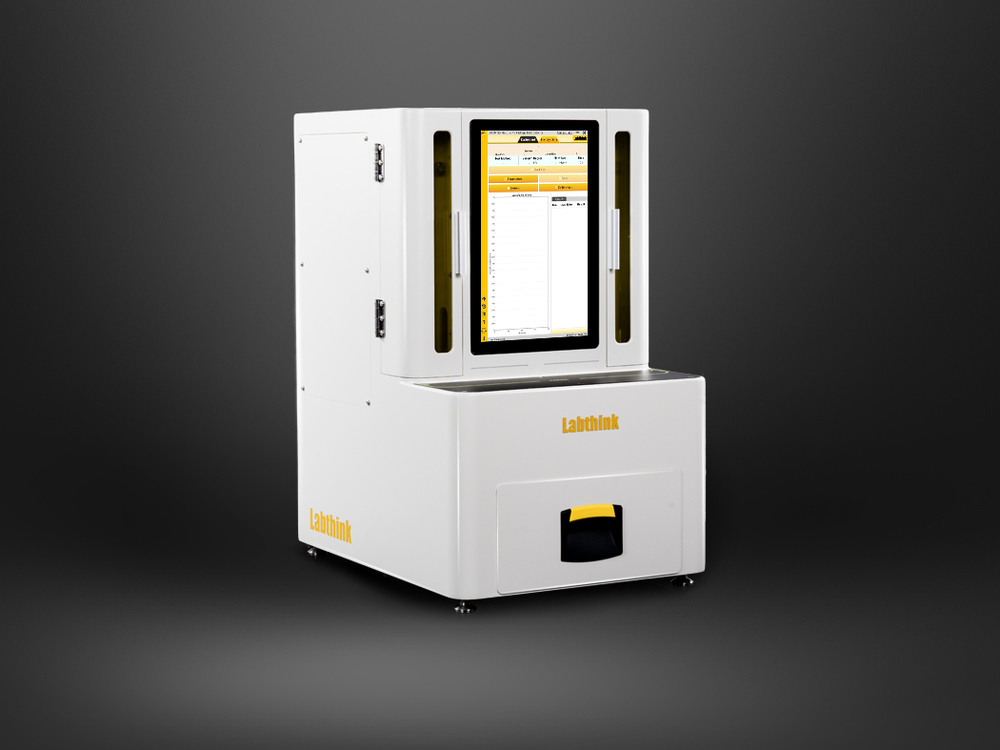
- Equipped with fully-automatic gravity fed sample feeder, which is Labthinks latest scientific and technological achievement that can facilitate continuous testing of 20 to 120 samples.
- A & B dual-channel design can test samples of two different specifications simultaneously.
- The target vacuum degree can be set by the operator to meet testing requirements of different samples.
- Dual methods of vacuum decay and pressure decay provide the flexibility to accommodate various types of package samples.
Precise Data
- Advanced pressure detection technology, using world renowned components for data stability which is not affected by ambient environment.
- Advanced microflow automatic flow control technology that can accurately simulate different sizes of leakage holes without manual adjustment.
- Both the differential pressure transducer and flow meter are traceable to NIST.
- The system can achieve a higher test repeatability of 1um.
Intelligent Control
- 15.6" embedded touch tablet computer with Windows OS.
- New longitudinal interface layout, and easy to use graphic user interface.
- Automatic alarm, automatic capture, automatic collection of unqualified samples.
- The pressure curve is displayed in real time, and the test results are counted automatically.
- Leakage rates are calculated automatically.
- The system is equipped with various sensors as intelligent reminders for safer operation and control.
- Universal printer can be connected for test results output.
- The system features embedded with USB and network ports to facilitate the external access and data transmission of the system, which can be upgraded remotely
Security Compliance
- Verified by compensation and calibration methods.
- The leak tester meets GMP requirements for data traceability and meets the needs of the pharmaceutical industry.
- User operation permission is managed at multiple levels, and the permission content can be configured on demand.
- Electronic signature is designed according to the standard requirements of 21 CFR Part11.
Test Principle
The sample is placed in the sample feeder and automatically delivered into the test cell. The leak rate and other results can be calculated and obtained by analyzing pressure changes measured by the sensor.
Reference Standards
ASTM F2338, YY-T 0681.18, and USP<1207>
Applications
| Basic Applications |
Vials |
Various vial sealing test. |
| Extended Applications |
Ampoule |
Various ampoule bottle sealing tests. |
| Cartridge Bottles |
Various cartridge bottle sealing tests. |
| Injection bottles |
Various injection bottles sealing test. |
Technical Parameters
Table 1: Test Parameters Note2
| ParameterModel |
C690H |
| Testing Range |
um(Reference aperture size USP1207) |
3i8igreat leakage |
| Detection Lower Limit |
um |
3 |
| Resolution |
um |
0.1 |
| Repeatability |
um |
1 |
| Pressure Range |
kPa |
-100i0ii14100 |
| Extended Functions |
21 CFR Part11 |
Optional |
| GMP computer system requirements |
Optional |
Table 2: Technical Specifications
| Testing Cell |
1 set for A group and 1 set for B group |
| Sample Feeder |
1 set for A group and 1 set for B group |
| Sample Size |
I45 mm80mmNote3 |
| Sample Quantity |
20120 pieces |
| Gas Specifications |
Compressed Air (Gas source is provided by the user) |
| Gas Source Pressure |
40.6 PSI / 500 kPa |
| Port Size |
I6 mm Polyurethane tube |
| Dimensions |
33.4 H x 19.6 W x 28.7 D (85cm 50cm 73cm) |
| Power |
120VAC10% 60Hz / 220VAC10% 50Hzi14select one from the twoi14 |
| Net weight |
209Lbs (95kg) |
Product Configuration
| Standard Configuration |
Mainframe, embedded tablet computer, software, flow meter, European vacuum pump, I6 mm polyurethane tube |
| Customization |
Test cell and sample feeder of group A, test cell and sample feeder of group B, negative standard reference sample and positive standard reference sample designed according to sample specifications |
| Optional Parts |
GMP computer system requirements, 21 CFR Part11, air compressor, IQ/OQ/PQ documents |
Note 1: The described product characteristics are subject to the specific annotation of the "Technical Parameters" table.
Note 2: The parameters in the table are measured in the Labthink laboratory by professional operators according to the requirements and conditions of the relevant laboratory environmental standards.
Note 3: Group C test cell can be customized for samples beyond the "Sample Size", but the lower detection limit and test range will change according to the sample size, and the actual delivery shall prevail.
Contact Us!
We can help you select or customize the
Non-Destructive Testing TechnologyUtilizing vacuum decay and pressure holding methods, the device assures accurate detection of packaging seal integrity without compromising product quality. It eliminates the risk of sample wastage and maintains the original condition of food packaging, making it ideal for quality control in the food industry.
Advanced Data Management and User InterfaceBuilt-in memory allows storage for up to 10,000 test records, while the digital LCD screen and microprocessor-based controls simplify operation. Users can export data via RS232/USB, and the device offers optional thermal printer support for comprehensive documentation and reporting.
Compliance and Safety FeaturesComplying with ASTM F2338, the tester integrates over-pressure protection and self-diagnosis for enhanced safety. Visual and audible alarms quickly notify users of seal failures, reducing manual inspection time and ensuring adherence to quality standards during testing.
FAQ's of Non-Destructive Food Packaging Seal Integrity Tester:
Q: How does the Non-Destructive Food Packaging Seal Integrity Tester identify seal failures?
A: The tester uses vacuum decay and pressure holding methods to evaluate seal integrity without damaging the packaging. Any breach in the seal is detected through changes in pressure, triggering visual and audible alarms to alert operators immediately.
Q: What types of food packaging can be tested with this device?
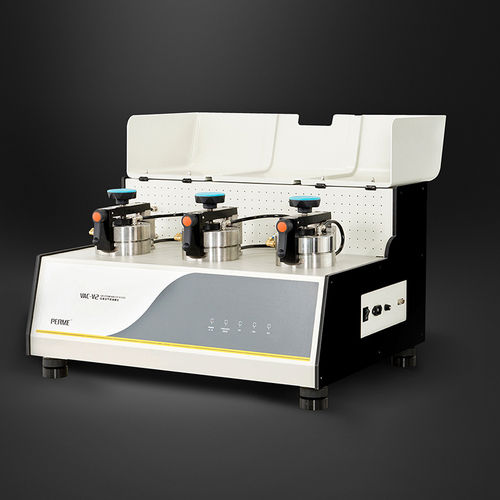
A: The equipment is suitable for a wide range of food packaging materials and sizes. Specimen dimensions are customizable, and the system accommodates up to three samples at a time, fitting most standard packaging used in the food industry.
Q: When should I perform seal integrity tests on food packaging?
A: It is recommended to conduct tests during production quality control, before shipment, or after packaging modifications to ensure that seals maintain optimal integrity and product safety throughout storage and distribution.
Q: Where can the tester be installed and used effectively?
A: This bench-top device is designed for quality control laboratories, manufacturing sites, and packaging facilities. Its compact size (510 x 390 x 350 mm) and 28 kg weight allow easy installation on workbenches or testing stations.
Q: What is the process for running a seal integrity test with this machine?
A: Users place the sealed food packaging specimen in the tester, select desired settings via the digital LCD interface, and initiate testing. The microprocessor automatically controls the test speed and stroke, while results are logged in the internal memory for analysis and reporting.
Q: How does built-in data storage and printer support benefit operations?
A: With storage for 10,000 tests, operators can track, analyze, and retrieve historical data efficiently. The optional thermal printer module enables immediate report generation, supporting documentation needs and facilitating regulatory compliance.
Q: What safety and compliance features ensure reliable operation?
A: The device meets ASTM F2338 standards and incorporates over-pressure safety protection and system self-diagnosis, reducing risks for operators. Alerts via visual and audible notifications also help maintain high testing accuracy and operational safety.
 English
 Spanish
 French
 German
 Italian
 Chinese (Simplified)
 Japanese
 Korean
 Arabic
 Portuguese








 Send Inquiry



