Product Description
Product FeaturesNote1
Innovative Design of Automatic Lifting of Sled & Upgraded Testing Accuracy and Repeatability
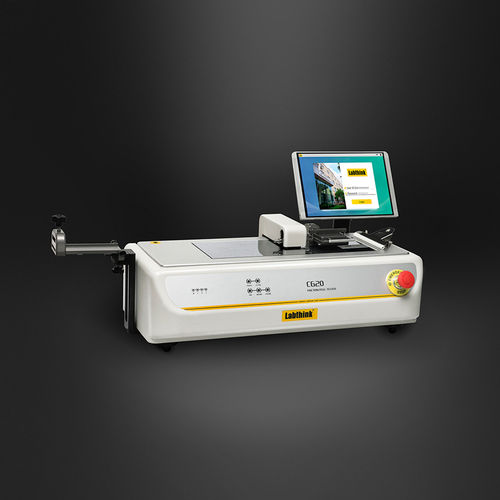
- Two test modes are available i.e. coefficient of friction and peel test
- Innovative automatic lifting of sled ensures accurate still time of the sled and guarantees the high repeatability of coefficient of friction test results
- The sliding plane and the sled are treated by degaussing and remanence detection which effectively reduce the system errors
- Wide range and high-precision of automatic temperature control system to support tests at different temperatures
- Force measuring system is supplied by global well-known supplier, the testing accuracy is higher than 0.5%FS, with better repeatability, multiple test ranges for choice
- Intelligent designs including position restriction, overload protection and auto reset guarantee the safe operation
- The instrument conforms to multiple ISO, ASTM and GB standards
High-end Easy-to-Use Embedded Computer Controlled System
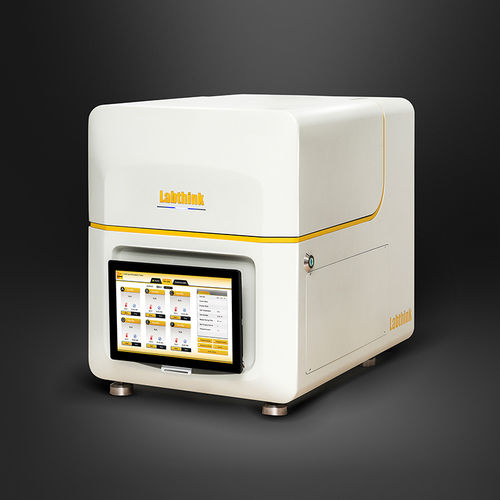
- Large touch screen tablet is easy to view and operate
- Brand new software which is easy to use simplifies the testing operations
- The instrument supports comparative analysis of group of test data, with unit conversion features
- USB ports and net port for data transmission and external connection
- The instrument conforms to the requirements of GMP (optional)
- Labthinks unique data security system,separates the test data from the computer to avoid the risks caused by computer virus
- Labthinks unique DataShiledTM System for data management and connecting with information system (optional)
Test StandardNote1
ISO 8295, ISO 8510-2, ASTM D1894, ASTM D4917, ASTM D3330, TAPPI T816, TAPPI T549, GB 10006,GB/T 2790,GB/T 2791,GB/T 2792
Applications
| Basic Applications |
- Plastic Films and Sheets
Coefficient of static and dynamic friction tests of plastic films and sheets
|
- Paper and Paperboard
Coefficient of static and dynamic friction tests of paper and paperboard
|
- Textiles, Non-woven Fabrics and Woven Bags
Coefficient of static and dynamic friction tests of textiles, non-woven fabrics and woven bags
|
- Rubber
Coefficient of static and dynamic friction tests of rubber products
|
- Aluminum Foils and Aluminum Foil Composite Films
Coefficient of static and dynamic friction tests of aluminum foils, aluminum foil composite films and other metal products
|
- Printing Matters
Coefficient of static and dynamic friction tests of printing matters
|
| Extended Applications |
- High Temperature Test
Coefficient of static and dynamic friction tests at higher temperature than room temperature
|
- Wood and Flooring
Coefficient of static and dynamic friction tests of wood and flooring
|
- Photographic Films
Coefficient of static and dynamic friction tests of photographic films
|
- Screen of Mobile Phone and Leather
Coefficient of static and dynamic friction tests of mobile screens against the leather products
|
- Adhesives
Peeling test of the adhesive products
|
- Medical Adhesives
Peeling test of medical adhesives e.g. adhesive bandages and plasters
|
- Protection Films
Peeling test of protection films for mobile phones or computers
|
- Magnetic Cards
Peeling test of the films and magnetic cards
|
Technical SpecificationsNote2
| Specifications |
C620H Friction / Peel Tester |
| Test Range |
0 5 N (standard)
0 10 N, 0 30 N, 0 50N, 0 100N (optional) |
| Force Accuracy |
Displayed Value 0.5% (10%FS-100%FS)
0.05%FS (0%-10% of the load cell range) |
| Force Resolution |
0.001 N |
| Test Speed |
0 500 mm/min (Any integer within this range can be set) |
| Speed Accuracy |
Displayed Value 0.5% (1%100% of maximum speed) |
| Stroke |
10 300 mm |
| Displacement Resolution |
0.01 mm |
| Test Temperature |
Room Temperature 100C |
| Temperature Variation |
0.2C |
| Temperature Accuracy |
2C (Single point calibration, within effective area of the test platform) |
| Test Platform |
400mm150mm |
| Specimen Thickness |
2 mm |
| Sled |
Weight: 200g Size: 63.5mm63.5mm
Customization is available |
| Power Supply |
220VAC10% 50Hz / 120VAC10% 60Hz |
| Instrument Dimension |
635 mm (L) 300 mm (W) 250 mm (H) |
| Net Weight |
25 kg |
Configurations
- Standard Configurations
- Instrument, Tablet, COF Test Fixture, Peel Test Fixture, 200g Sled, Sampling Block
- Optional Parts
- Standard Pressure Roller, Test Plate, Printer, Air Compressor, GMP System, DataShieldTM Note3
Note 1: The described test standard, applications and product features should be in line with Technical Specifications.
Note 2: The parameters in the table are measured by professional operators in Labthink laboratory under strictly controlled laboratory conditions.
Note 3: DataShieldTM provides safe and reliable data application support. Multiple Labthink instruments can share one single DataShieldTM system which can be configured as required.
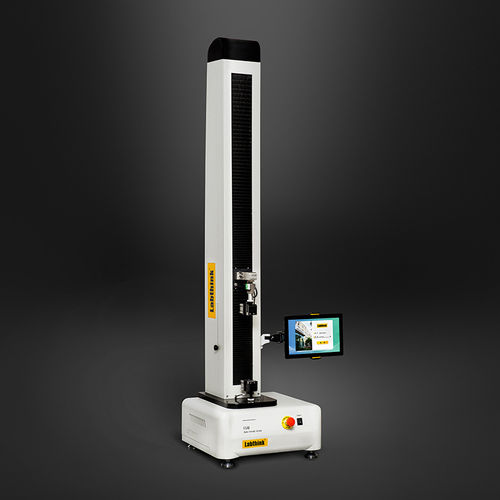
Accurate Peeling Strength MeasurementsEquipped with a high-precision strain gauge load cell and digital microprocessor control, the instrument delivers repeatable measurements with an accuracy of 1% and a fine resolution of 0.01 N. The 90/180 selectable test modes and programmable speed ensure versatility for various material types and testing requirements.
User-Friendly and Data-DrivenAn intuitive digital LCD display showcases real-time peeling force, displacement, and comprehensive test curves. Digital connectivity via RS232 or USB enables seamless data export and analysis, supporting efficient documentation and compliance with international testing standards.
Safety and Reliable PerformanceThe system is built with comprehensive safety features, including overload protection and emergency stop. It is designed for operation in dust-free, vibration-free environments, offering robust performance across a wide ambient temperature and humidity range suitable for demanding laboratory or industrial settings.
FAQs of Peeling Strength Test Instrument:
Q: How does the programmable microprocessor unit enhance the testing process?
A: The programmable microprocessor unit allows operators to precisely set test parameters such as speed, peel angle, and stroke length. This ensures consistent, repeatable testing, minimizes human error, and facilitates rapid adjustments for different sample types or testing standards as required.
Q: What types of materials can be tested with this peeling strength instrument?
A: This instrument is designed to measure the peel or adhesion strength of a variety of materials, including adhesive tapes, laminates, metallic foils, labels, and flexible films. Its versatile grip and adjustable test settings make it suitable for R&D, quality control, and lab applications.
Q: When should I use the 90-degree versus the 180-degree test mode?
A: The 90-degree test mode is typically selected when evaluating the peel strength of materials adhered to rigid substrates, while the 180-degree mode is ideal for flexible or thin materials. Both modes offer compliance with common IS, ASTM, and IEC standards depending on your application.
Q: Where should the Peeling Strength Test Instrument be installed for optimal performance?
A: Install the instrument in a stable, vibration-free, and dust-free environment to ensure accurate measurements. Avoid areas with excessive humidity (above 85% RH), and maintain an ambient temperature between 5C and 40C as these factors can affect testing reliability.
Q: What is the process for clamping specimens, and how is sample size determined?
A: Specimen clamping is performed manually or with pneumatic grips, depending on user preference and material type. The instrument accommodates samples up to 50 mm in width and a minimum of 100 mm in length, allowing for flexible testing across different material sizes.
Q: How is test data output and utilized during analysis?
A: Test results, including force, displacement, and real-time graphs, are displayed on the digital LCD screen and can be exported via RS232 or USB connection. This digital output supports efficient data analysis, archiving, and compliance reporting as required for laboratory and industrial settings.
Q: What are the primary benefits of using this peeling strength tester in a quality control setting?
A: Benefits include high measurement accuracy, reliable safety features, flexible testing parameters, rapid response time (<0.5s), and full compliance with international standards. These features bolster confidence in product quality assessment and expedite decision-making in quality control workflows.
 English
 Spanish
 French
 German
 Italian
 Chinese (Simplified)
 Japanese
 Korean
 Arabic
 Portuguese










 Send Inquiry



