Product Description
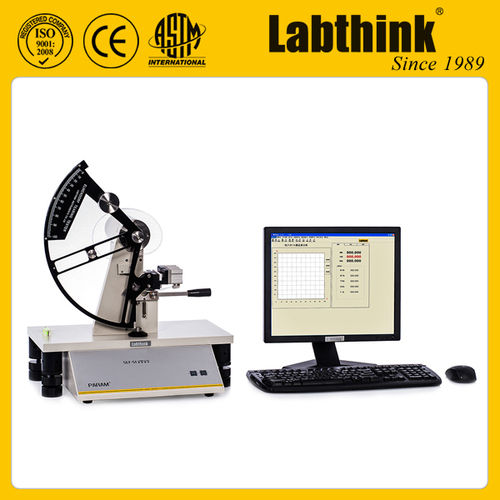
Product Features Notes1
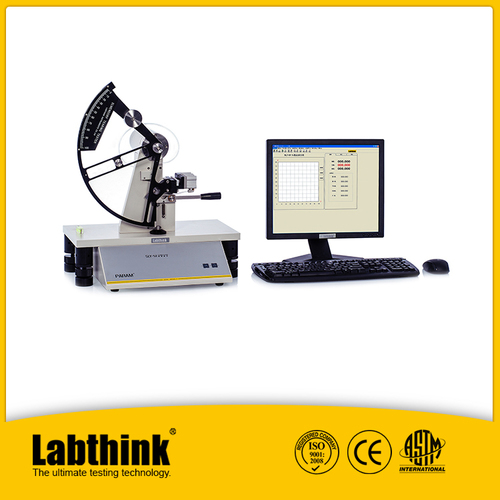
- Computer control, automatic electronic measurement, easy to operate.
- Pneumatic sample clamping and automatic pendulum release can effectively avoid the systematic error caused by human factors.
- Computer assisted adjustment system can ensure the instrument is always in the best test state.
- It can be equipped with multiple groups of pendulum capacity to meet different test requirements.
- Professional software supports the data output of various test units.
- Standard RS232 interface is convenient for external access and data transmission of the system.
Test Principle
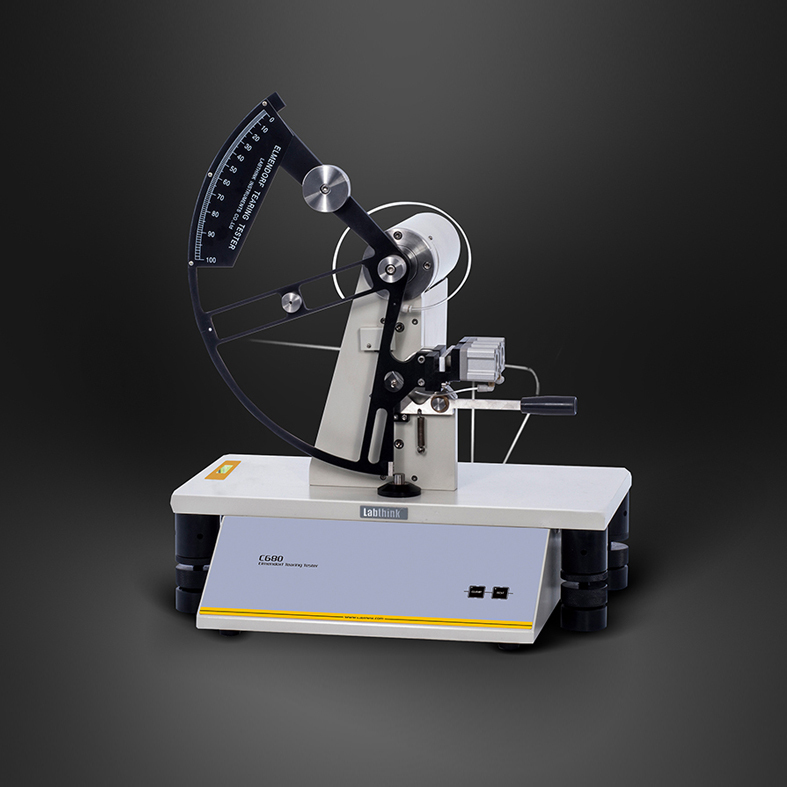
Lift the pendulum to a certain height to make it have a certain potential energy; when the pendulum swings freely, it uses its own stored energy to tear the sample; the computer control system calculates the energy consumed in tearing the sample, so as to obtain the force required for tearing the sample.
Reference Standard Notes1
ISO 6383-1-1983, ISO 6383-2-1983, ISO 1974, GB/T 16578.2-2009, GB/T 455, ASTM D1922, ASTM D1424, ASTM D689, TAPPI T414
Test Applications
| Basic Applications |
- Plastic film, sheet, such as polyolefin, polyester, aluminum plastic composite film, etc
|
|
|
|
|
| Extended Applications |
|
|
|
|
|
|
|
|
Technical Parameters Notes2
| Items |
Parameters |
| Pendulum Capacity |
200gfa400gfa800gfa1600gfa3200gfa6400gf |
| Air Source Pressure |
0.6 MPa (supplied by user) |
| Air Connection |
I 4 mm polyurethane pipe |
| Dimensions |
480 mm (L) 380 mm (W) 560 mm (H) |
| Mainframe Power Supply |
220VAC 50Hz / 120VAC 60Hz |
| Net Weight of Mainframe |
40kg (200gf basic pendulum) |
Product Configuration Notes1
| Standard configuration |
Mainframe, 1 Basic pendulum, 1 calibration weight, professional software, communication cable |
| Options Notes3 |
Basic pendulum: 200gf, 1600gf
Weight gain: 400gf, 800gf, 3200gf, 6400gf
Calibration weights: 200gf, 400gf, 800gf, 1600gf, 3200gf, 6400gf
computer |
| Notes |
The air source interface of the machine is I 4 mm polyurethane pipe; the air source is provided by the user |
Note 1: The product functions, reference standards and configuration information are subject to the specific marks in the "technical indicators".
Note 2: The parameters in the table are measured by professional operators in Labthink laboratory according to the requirements and conditions of relevant laboratory environmental standards.
Note 3: "basic pendulum" should select at least one pendulum capacity, "correction weight" should be consistent with the pendulum capacity, and it should be noted when placing an order.
Advanced Data ManagementInternal memory and efficient software compatibility allow automatic recording and detailed analysis of test results. Data export options via USB/RS232 streamline information transfer for comprehensive reporting. These features enhance traceability and make workflow easier in demanding laboratory and industrial environments.
Guaranteed Safety and ReliabilityWith emergency stop and overload protection mechanisms, the equipment ensures operator safety during rigorous testing procedures. Both automatic and manual calibration functions provide consistently accurate measurements, aligning with global standards and industry requirements.
Customizable and Versatile TestingSupporting peel, tear, and tensile modes, the tester utilizes pneumatic clamps that can be customized to fit various sample sizes. It adapts to different specimen types and allows simultaneous testing of multiple samples (up to five), boosting throughput and flexibility for research and production settings.
FAQ's of Efficient aluminum plastic composite panel tear strength evaluation:
Q: How does the Aluminum Plastic Composite Panel Tear Strength Tester ensure data accuracy during testing?
A: The tester utilizes both automatic and manual calibration methods, maintaining accuracy to within 0.5%. It records real-time data and supports internal memory backup, ensuring all results are precise and traceable according to compliance standards like ASTM D1876 and ISO 6133.
Q: What is the process for exporting test data from the equipment?
A: Users can export test records directly via USB or RS232 interface, enabling integration with compatible PC software for in-depth analysis, report generation, and archiving. This process is designed to be straightforward, supporting seamless data management.
Q: Where should the tester be installed for optimal operation?
A: It is recommended to operate the equipment in a clean, vibration-free room, maintaining ambient conditions between 10C to 40C and humidity levels from 20% to 80% RH (non-condensing) to achieve the best measurement accuracy and reliability.
Q: What types of specimens and clamp sizes can the machine accommodate?
A: The tester supports specimens up to 100 mm 10 mm and accepts standard sample clamps sized between 10-50 mm. Pneumatic clamps are customizable, ensuring compatibility with different materials and requirements.
Q: When is it beneficial to use the automatic calibration feature over manual calibration?
A: Automatic calibration is valuable for routine checks and high-throughput testing when rapid, consistent calibration is needed. Manual calibration offers additional control for specialized tests or when verifying equipment accuracy after maintenance or relocation.
Q: How does the emergency stop and overload protection contribute to user safety?
A: The integrated safety protection features instantly halt operations during unexpected overloads or emergencies, preventing equipment damage and minimizing risks to operators during high-force testing scenarios.
 English
 Spanish
 French
 German
 Italian
 Chinese (Simplified)
 Japanese
 Korean
 Arabic
 Portuguese










 Send Inquiry



