Product Description
Product FeaturesNote1
Infrared sensor
- Equipped with Labthink patented infrared sensor, features a wider test range.
- Designed conforming to ASTM F1249.
- Ultra-long service life, non-consumable type.
- Embedded with over-range warning and automatic protection function.
Accurate data
- Brand new dome design test chamber and 360 air circulation constant temperature technology ensures better temperature stability.
- The test chamber is equipped with a high-precision humidity sensor to monitor and record humidity changes in real time.
- The control of velocity, temperature and relative humidity is automated to realize higher accuracy.
High Efficiency
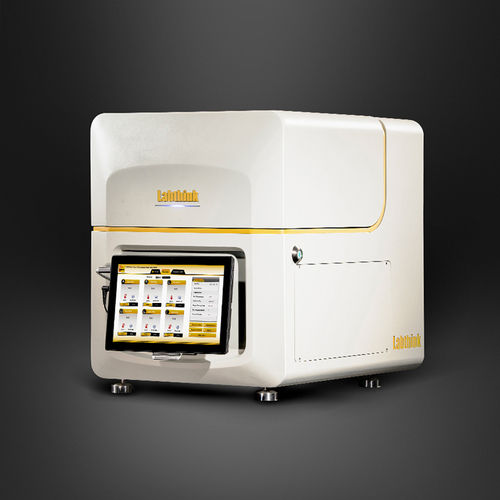
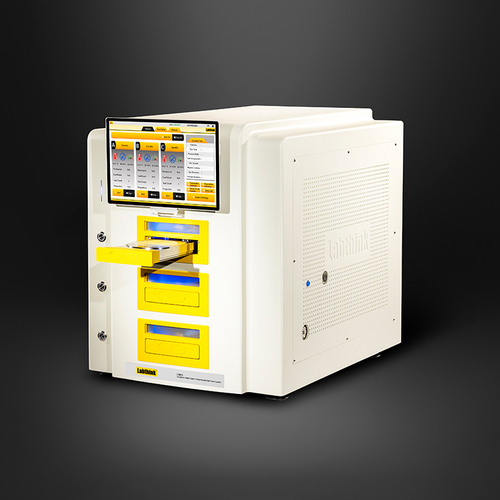
- Six independent test cells with a standard area of 50cm2, three times the number of test cells in traditional oxygen permeability testing instruments
- Six specimens can be tested simultaneously under the same testing condition, delivering independent test result.
- Within the same time duration, the number of tested specimens is increased from 2 to 6.
- Automatic specimen clamping saves time and effort. The clamping force is consistent, resulting in better air tightness.
Intelligent control
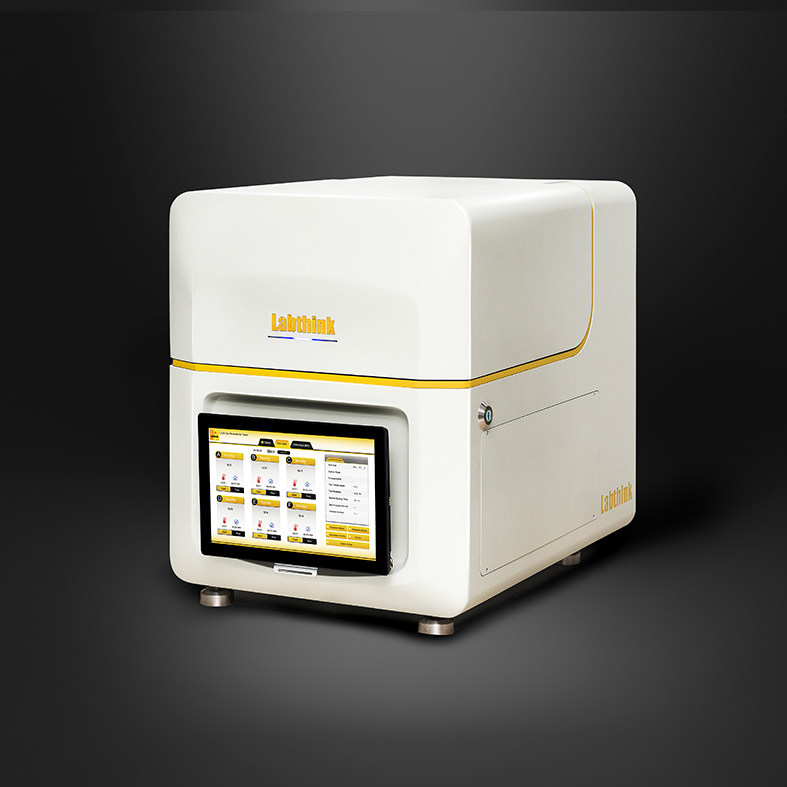
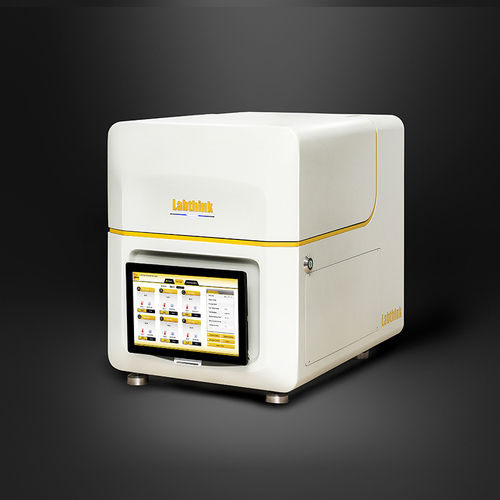
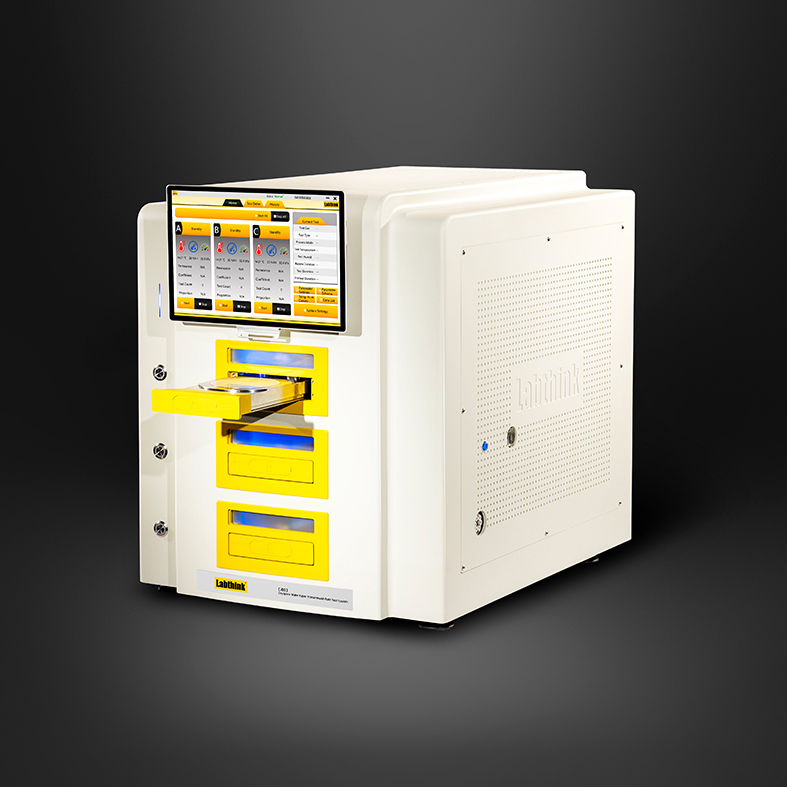
- 12 touch-screen tablet powered by WindowsTM 10 operating system makes the operation simpler and more convenient.
- Automatic test mode requires only inputting temperature and humidity, one click startup, the test is fully automated.
- Intelligent test chamber hood automatically opens and closes with sound and light alert.
Safe and reliable
- System security -- Built-in Labthink's unique high-end industrial computer prevents system failures caused by computer viruses, ensures operational reliability and data storage security.
- Operation safety-- Equipped with various intelligent sensors which give sound and light alert to ensure safe operation.
- Performance reliabilitythe instrument adopts components of global renowned brands, to ensure stable and reliable performance.
Space saving
- The width of the instrument is only 1/3 of the traditional six-cell instrument, saving space for a laboratory.
Powerful functions
- Professional test mode provides flexible and diverse control options to meet various needs of scientific research.
- The system provides oxygen transmission rate curve, oxygen transmission coefficient curve, temperature curve, and humidity curve.
- Ultra-wide test range to meet the barrier test of various materials (customize).
- Ultra-wide temperature range to meet the barrier test under different extreme temperatures (optional).
Test Principle
The pre-conditioned specimen is clamped in the test cell, nitrogen with stable relative humidity flows on one side of the specimen while a stream of dry nitrogen flows on the other side. Due to the humidity difference, water vapor permeates through the specimen from the high humidity side into the low humidity side, and is carried to the infrared sensor by the dry nitrogen flow. By analyzing the electrical signals generated by the water vapor, the sensor calculates the water vapor concentration and the water vapor transmission rate.
Standard
ASTM F1249aISO 15106-2aGB/T 26253aJIS K7129aYBB00092003-2015
Applications
| Applications |
- Films
Water vapor transmission rate test of various plastic films, paper-plastic composite films, coextruded films, aluminized films, aluminum foils, aluminum foil composite films, glass fiber aluminum foil composite films and many others.
|
- Sheets
Water vapor transmission rate test of PP, PVC and PVDC sheets, metal foils, rubber pads, silicon wafers and other sheet materials.
|
Technical Specifications
Table 1: Test Parameters Note2
| Parameters/Model |
C306H |
| Test range |
g/(m2day) (Standard area 50cm2) |
0.02i40 |
| g/(m2day) (MASK area 5cm2) |
0.2i400i14Optionali14 |
| g/(m2day) (MASK area 1cm2) |
1i2000i14Optionali14 |
| Resolution |
g/(m2day) |
0.0001 |
| Repeatability |
g/(m2day) |
0.02 or 2%i14take the greater |
| Test Temperature |
|
15i50i145i60i14Optionali14 |
| Temperature fluctuation |
|
0.15 |
| Test Humidity |
%RHi14Within standard temperature rangei14 |
100%i145i902% |
| Additional Functions |
DataShieldTM note3 |
Optional |
| GMP Computer System requirement |
Optional |
| CFR21Part11 |
Optional |
Table 2: Technical Specifications
| Test Cell |
6 Cells |
| Specimen Size |
4.6 x 4.6i1411.7cm11.7cmi14 |
| Specimen Thickness |
120 Mili143mmi14 |
| Standard test area |
50cm2 |
| Carrier Gas |
99.999% High purity nitrogen(Outside of supply scope) |
| Carrier Gas Pressure |
40.6 PSI / 280 kPa |
| Port Size |
1/8 Metal tube |
| Instrument Dimension |
23.6 H x 19.2 W x 25.9 D (60cm 49cm 66cm) |
| Power Supply |
120VAC10% 60Hz / 220VAC10% 50Hzi14one of twoi14 |
| Net Weight |
220Lbsi14100kgi14 |
Table 3: Product Configuration
| Standard Configuration |
Instrument mainframe, tablet, sampler, vacuum grease, I6 mm PU tubing |
| Optional Parts |
Air compressor, CFR21Part11, GMP Computer System Requirement, DataShieldTM note3 |
| Note |
The gas supply port of the instrument is I6 mm PU tubingi14pressure79.7 PSI / 550 kPai14, customers need to prepare gas supply. |
Note 1: The described product functions are subject to the specification in "Technical Parameters".
Note 2: The parameters in the table are measured in Labthink laboratory by professional operators according to the requirements and conditions stapulated in laboratory environmental standards.
Note 3: DataShieldTM provides safe and reliable data application support. Multiple Labthink instruments can share one single DataShieldTM system which can be configured as required.
Precise & Compliant AssessmentThe tester offers dependable evaluation of water vapour transmission in starch-based biodegradable films, complying with ASTM E96 and ISO 2528. High sensitivity and automatic controls ensure repeatable, accurate results, making it essential for quality assurance and research applications.
Flexible Application & User-Friendly OperationDesigned for versatility, this system supports multiple specimen testing, easy sample mounting, and intuitive digital controls. Adjustable test parameters and a range of output options accommodate different workflow requirements across polymer and biodegradable film studies.
FAQ's of Method and Instrument Assessing Water Vapour Barrier Properties of Starch-Based Biodegradable Films:
Q: How does the gravimetric cup method assess water vapour barrier properties in this tester?
A: The gravimetric cup method determines water vapour transmission by measuring weight changes over time, using a high sensitivity electronic balance. This approach provides accurate quantification of water vapour passing through starch-based biodegradable films under controlled temperature and humidity.
Q: What types of materials and specimen sizes can be tested with this equipment?
A: This instrument supports the analysis of starch-based biodegradable films, flexible polymers, and similar materials. It accommodates specimens with a diameter of 80 mm, allowing up to three samples to be tested simultaneously.
Q: When should automatic self-calibration and overload protection be used?
A: Automatic self-calibration occurs before each test session to ensure measurement accuracy. Overload and leakage protection are always active, safeguarding both the equipment and samples during operation, particularly under higher capacity conditions (up to 500 N).
Q: Where is this Water Vapour Transmission Rate Tester best utilized?
A: The tester is ideal for research, development, and quality control laboratories, particularly in settings involved with biodegradable films and polymer materials, such as materials science research institutes, manufacturing quality control, and academic environments.
Q: What is the test process, and how is environmental control managed?
A: Specimens are mounted on the testing platform within a chamber where temperature (room to 50C) and humidity (10-90% RH) are automatically regulated via PID feedback. The digital microcomputer controls the entire test, records data, and enables seamless memory storage and multi-batch testing.
Q: How can users benefit from the selectable data output and memory storage features?
A: Users can easily transfer results to a PC or printer for documentation and analysis. The multi-batch memory storage simplifies record-keeping and comparison across multiple tests, improving workflow efficiency and data traceability.
Q: What makes this instrument advantageous for laboratory automation and flexibility?
A: With automatic operation, adjustable test speeds, precise sensor integration, and compatibility with multiple digital interfaces (RS232, USB), the tester enhances productivity and reduces manual errors while accommodating variable research and quality assurance needs.
 English
 Spanish
 French
 German
 Italian
 Chinese (Simplified)
 Japanese
 Korean
 Arabic
 Portuguese










 Send Inquiry



