Product Description
Product FeaturesNote1
Multiple Test Modes & Intelligent Statistics of Qualified Specimens
- Negative pressure method
- Multiple test modes including standard, multi-grade vacuum and methylthionine chloride mode
- Automatic test with traditional methylthionine chloride
- Vacuum degree, test time and infiltration time can be adjusted and test parameters can be saved automatically so that the tests with same test parameters can be started quickly
- Automatic constant pressure compensation ensures that the tests can be performed under preset vacuum conditions
- Real-time display of test curves, easy to observe the test results
- Automatic statistics of qualified specimens
- Main components and parts are supplied by well-known global manufacturers, with guaranteed performance
Brand New Patented Intelligent Touch Operating System
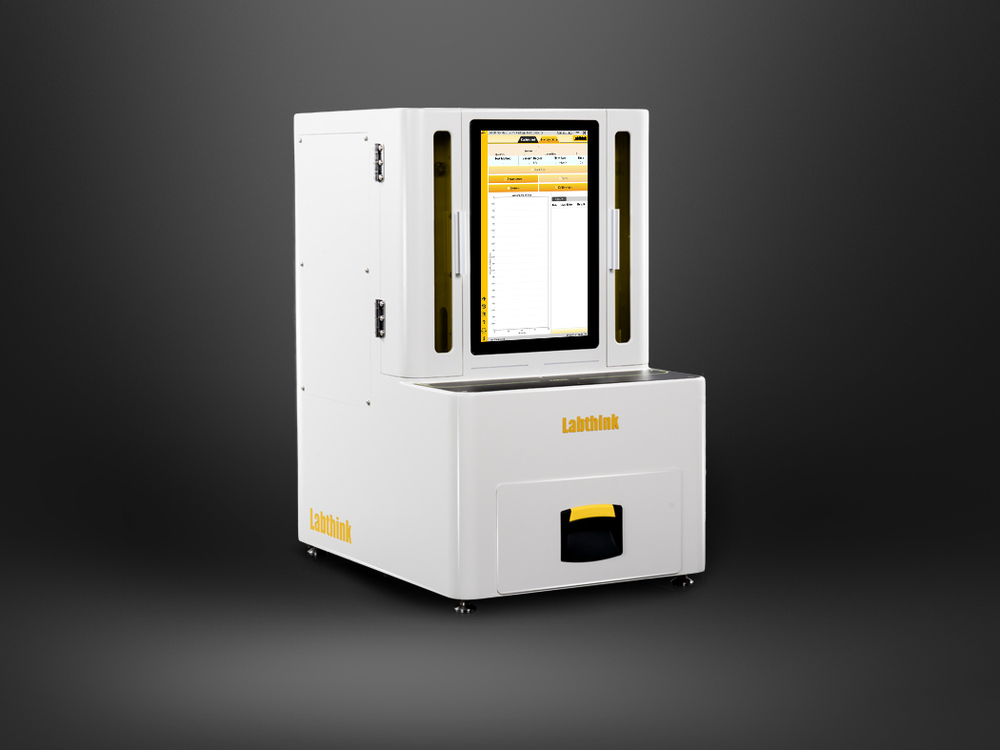
- Industrial grade touch screen, one-button operation, simplified operating interface, remote upgrade and maintenance
- Chinese and English operating interface
- Measurement unit conversion
- Automatic data storage and power failure memory to prevent data loss
- Storage up to 1200 test records (standard mode)
- Multiple-level user management and login with password
- Micro-printer and USB ports for data transmission (optional)
- The instrument conforms to the requirements of GMP (optional)
- Labthinks unique DataShiledTM System for data management and connecting with information system (optional)
Test Principle
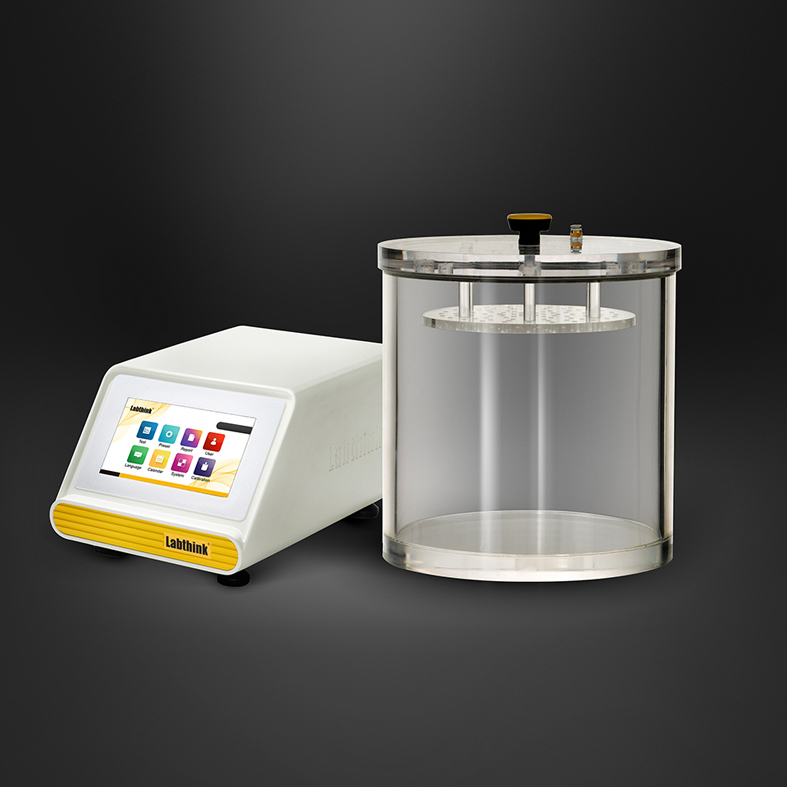
Firstly submerge the specimen in the water in the vacuum chamber, and then evacuate the vacuum chamber to form differential pressure between the inside and outside of specimen. The seal property can be obtained by observing the steady progression of bubbles from the specimen or observing how the specimen expands and restores to its original shape after vacuum release.
Test StandardNote1
ASTM D3078, GB/T 15171
Applications
| Basic Applications |
- Glass Bottles, Pipes, Cans and Boxes
|
- Plastic Bottles, Pipes, Cans and Boxes
|
- Metal Bottles, Pipes, Cans and Boxes
|
- Paper Plastic Composite Bags and Boxes
|
| Extended Applications |
|
|
|
|
|
|
Technical Specifications
| Specifications |
C660B |
| Vacuum Degree |
0 -90 KPa/ 0 -13 psi |
| Accuracy |
0.25% FS |
| Resolution |
0.1 KPa / 0.01 psi |
Vacuum Chamber
Effective Sizes |
I270 mm x 210 mm (H) (standard) |
| I360 mm x 585 mm (H) (optional) |
| I460 mm x 330 mm (H) (optional) |
| Note: customization is available for other sizes |
| Gas Supply |
Air (outside of supply scope) |
| Gas Supply Pressure |
0.5 MPa 0.7 Mpa (73psi 101psi) |
| Instrument Dimension |
334 mm (L) x 230 mm (W) x 170 mm (H) |
| Power Supply |
220VAC10% 50Hz / 120VAC10% 60Hz |
| Net Weight |
Instrument: 6.5 kg Standard Vacuum Chamber: 9kg |
Configurations
- Standard Configurations
- Instrument, Standard Vacuum Chamber (I270 mm x 210 mm), I6 PU Tubing (1m)
- Optional Parts
- Micro Printer, Professional Software, Customized Vacuum Chamber, Air Compressor, GMP System, DataShieldTM Note3
- Note
- 1. The gas supply port of the instrument isI6 mm PU Tubing;
2. Customers need to prepare gas supply.
Note 1: The described test standard, applications and product features should be in line with Technical Specifications.
Note 2: The parameters in the table are measured by professional operators in Labthink laboratory under strictly controlled laboratory conditions.
Note 3: DataShieldTM provides safe and reliable data application support. Multiple Labthink instruments can share one single DataShieldTM system which can be configured as required.
Advanced Leakage Testing TechnologyThe equipment employs sophisticated leakage detection using compressed air, evaluating tube integrity with both pressure decay and bubble emission methods. Its microprocessor-based control ensures accurate, repeatable results, making it an ideal choice for quality assurance in packaging operations. Calibration is recommended annually to maintain measurement fidelity.
Compliance and Safety FeaturesCertified under ASTM F1140 and ISO 11607, this tester integrates critical safety features such as overpressure protection and an emergency stop. Operating at an ambient noise level of 60 dB, it delivers both a safe and comfortable working environment for operators.
User-Friendly Operation and Digital InterfaceThe device offers a convenient manual sample-loading process and a digital LCD display, ensuring clear visibility of test results. Automatic data recording and adjustable parameters streamline workflow, while RS232 connectivity allows for easy data management and export.
FAQ's of Plastic and Aluminum Ointment Tubes Material Properties and Leakage Testing:
Q: How does the leakage tester ensure accurate detection of seal integrity in plastic and aluminum ointment tubes?
A: The tester utilizes compressed air as the test medium, employing pressure decay or bubble emission methods to identify potential leakage points. Its microprocessor control and automatic data recording provide high-precision results in real time, enhancing the reliability of seal integrity assessments.
Q: What materials and specimen sizes are compatible with this leakage tester?
A: The equipment is compatible with plastic, aluminum, and laminated tubes. It accommodates specimen lengths of 80 mm or can be customized to suit specific requirements, supporting a range of test widths up to 30 mm and heights up to 150 mm.
Q: When should the leakage tester be calibrated, and why is calibration important?
A: Annual calibration is recommended to comply with industry standards and to ensure the device maintains its high measurement accuracy (0.5% FS). Proper calibration confirms that the machine provides consistent and reliable results over extended use.
Q: Where can this leakage tester be integrated within manufacturing operations?
A: The device is suitable for bench-top mounting and is designed for use in packaging laboratories, production quality control rooms, and research facilities. Its semi-automatic operation allows flexibility for both small and large batch testing.
Q: What is the testing process for tube leakage and what data does the equipment record?
A: Operators manually load tubes, select test parameters, and initiate the leakage test. During testing, the equipment measures pressure fluctuations and automatically records results such as pressure, response time (0.1 s), and test outcome in the onboard memory, all of which can be exported via RS232 interface.
Q: How does the equipment benefit tube packaging manufacturers and exporters?
A: By quickly detecting even minor leaks, the tester helps manufacturers ensure compliance with international quality standards, reduces the risk of product recalls, and builds confidence in packaging reliability for end-users and exporting markets.
 English
 Spanish
 French
 German
 Italian
 Chinese (Simplified)
 Japanese
 Korean
 Arabic
 Portuguese








 Send Inquiry



