Product Description
Features
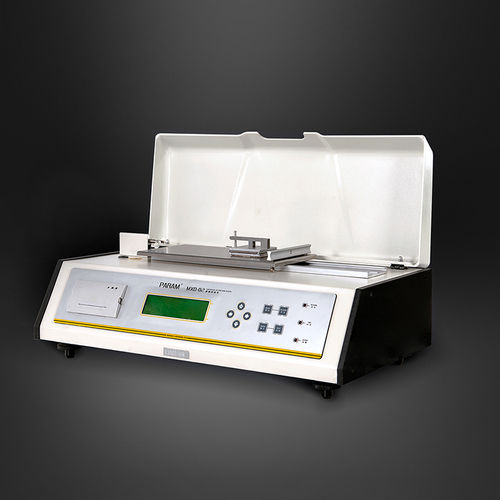
- Static and kinetic coefficients of friction can be tested for each specimen
- This instrument conforms to multiple standards of ISO, ASTM and GB and the user could select testing methods as required
- Test speed could be preset and adjusted by the users as required
- Sled of specific weight could be customized
- The sliding plane and the sled are treated by degaussing and remanence detection which effectively reduce the system error
- Top quality parts and components made by world famous brands are used to ensure reliable overall product performance
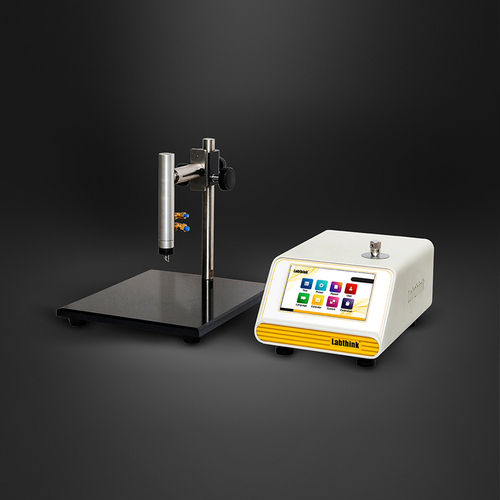
- The instrument is controlled by micro-computer with LCD display, PVC operation panel and menu interface
- Professional operating software support statistical analysis of single specimen, group specimens, superposition analysis of test curves and historical data comparison functions
- Equipped with RS232 port and micro printer port which is convenient to the data transmission and PC connection
- Supports LystemTM Lab Data Sharing System for uniform and systematic data management
Standards
This instrument conforms to various national and international standards:
ISO 8295, ASTM D1894, TAPPI T816, GB 10006
Applications
| Basic Applications |
- Plastic Films and Sheets
Coefficient of static and dynamic friction tests of plastic films and sheets
|
- Paper and Paperboard
Coefficient of static and dynamic friction tests of paper and paperboard
|
- Textiles, Non-woven Fabrics and Woven Bags
Coefficient of static and dynamic friction tests of textiles, non-woven fabrics and woven bags
|
- Rubber
Coefficient of static and dynamic friction tests of rubber products
|
- Aluminum Foils, Aluminum Foil Composite Films, and Metal Products
Coefficient of static and dynamic friction tests of aluminum foils, aluminum foil composite films and other metal products
|
- Printing Matters
Coefficient of static and dynamic friction tests of printing matters
|
| Extended Applications |
- Wood and Flooring
Coefficient of static and dynamic friction tests of wood and flooring
|
- Photographic Films
Coefficient of static and dynamic friction tests of photographic films
|
- Grains
Coefficient of static and dynamic friction tests of grains against the metal materials
|
- Hair
Coefficient of static and dynamic friction tests of the hairs
|
- Pipes
Coefficient of static and dynamic friction tests of pipes
|
- Ball Shaped Materials
Coefficient of static and dynamic friction tests of the ball shaped material against even leveled materials
|
- Medical Tubes
Coefficient of static and dynamic friction tests of medical tubes and artificial skin
|
- Lacquered Wires
Coefficient of static and dynamic friction tests of the lacquered wire against even leveled materials
|
Technical Specifications
| Specifications |
MXD-02 Coefficient of Friction Tester |
| Capacity Range |
0 5 N |
| Accuracy |
0.5% FS |
| Stroke |
70 mm, 150 mm |
| Mass of Sled |
200 g (Standard) |
| Sled of specific weight could be customized |
| Test Speed |
100 mm/min, 150 mm/min |
| Test speed could be adjusted |
| Environment Condition |
Temperature: 232C |
| Humidity: 20%RH 70%RH |
| Power Supply |
220VAC 50Hz / 120VAC 60Hz |
| Instrument Dimension |
630 mm (L) x 360 mm (W) x 230 mm (H) |
| Net Weight |
33 kg |
Configurations
- Standard Configurations
- Instrument, Micro Printer and Sled of 200g
- Optional Parts
- Professional Software, Communication Cable and Customized Sled of 500g
Superior Precision and VersatilityEngineered for accuracy, this equipment measures friction forces from 0 to 1000 N with a resolution of 0.01 N and responds in under one second. Automated and manual calibration options ensure long-term reliability, while multi-sample capability (1-5 specimens, customizable sizes) supports diverse industrial requirements. Applications range from predictive maintenance to evaluating industrial lubricants on materials of varying hardness.
Seamless Data Management and CompatibilityData is automatically recorded and stored internally, with easy export via USB or RS232 interfaces. Included Windows-based analysis software facilitates deep data insight and trend analysis. The digital LCD displays measurements clearly, while the digital touch screen streamlines user interaction and control over test parameters.
Robust Design and Enhanced MobilityConstructed from powder-coated steel with integrated wheels, this friction assessment equipment offers high durability and effortless transportability in demanding settings. With dimensions supporting tabletop use and a weight of about 100 kg, it balances robust performance and convenient handling for industrial workflows.
FAQ's of Friction Assessment Equipment as a Predictive Maintenance Tool:
Q: How does the friction assessment equipment support predictive maintenance?
A: The equipment provides real-time, highly accurate measurement of friction parameters, enabling early detection of lubrication issues or surface wear. This predictive maintenance capacity helps schedule interventions before failures occur, reducing downtime and maintenance costs.
Q: What is the process for storing and exporting test data?
A: Test data is automatically recorded in the device's internal memory. For broader analysis or record-keeping, data can be exported efficiently via USB or RS232 ports, allowing flexible data management and integration with external systems.
Q: When should I perform calibration, and is it difficult?
A: Calibration can be performed automatically or manually as needed, typically before critical testing periods or if accuracy checks suggest deviations. The process is straightforward, guided by built-in software, ensuring measurements remain reliable over time.
Q: Where can this friction assessment equipment be installed and used?
A: Designed for tabletop mounting, the equipment is suitable for laboratories, workshops, or production floors. Its integrated wheels provide mobility, allowing it to be easily moved between locations within a facility.
Q: What are the main safety features of this equipment?
A: The device includes overload protection mechanisms and an emergency stop function, ensuring operator and equipment safety during unexpected conditions or misuse.
Q: How is maintenance managed, and what support is available?
A: The equipment is designed for low maintenance. For servicing or troubleshooting, comprehensive onsite and online technical support are available, ensuring minimal disruption to operations.
Q: What are the benefits of using this equipment for industrial lubrication analysis?
A: Utilizing this equipment provides detailed and precise friction data, supporting optimal lubricant selection and application. This enhances equipment lifespan, improves operational efficiency, and aids compliance with environmental and safety standards.
 English
 Spanish
 French
 German
 Italian
 Chinese (Simplified)
 Japanese
 Korean
 Arabic
 Portuguese










 Send Inquiry



