Product Description
Product Features
New Generation Integrated Testing Block
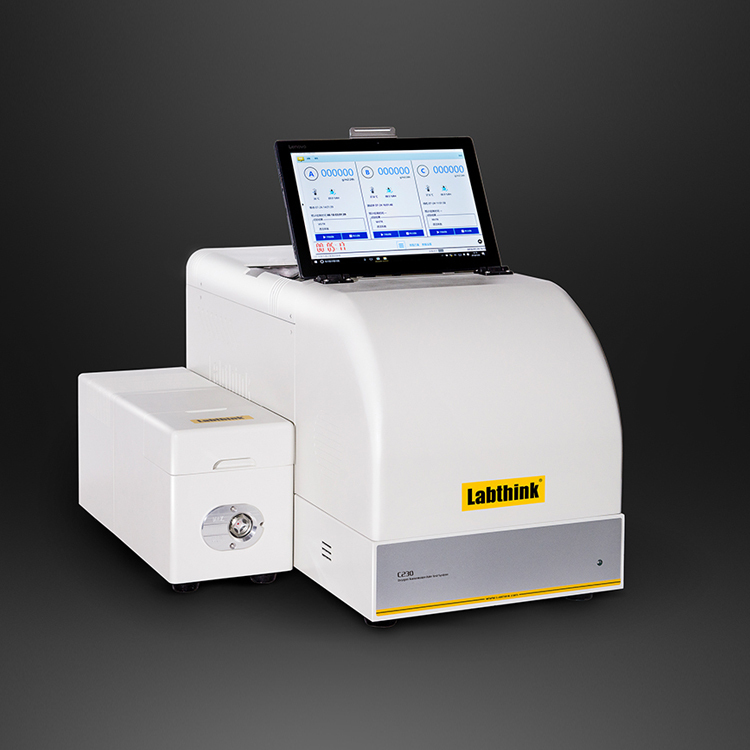
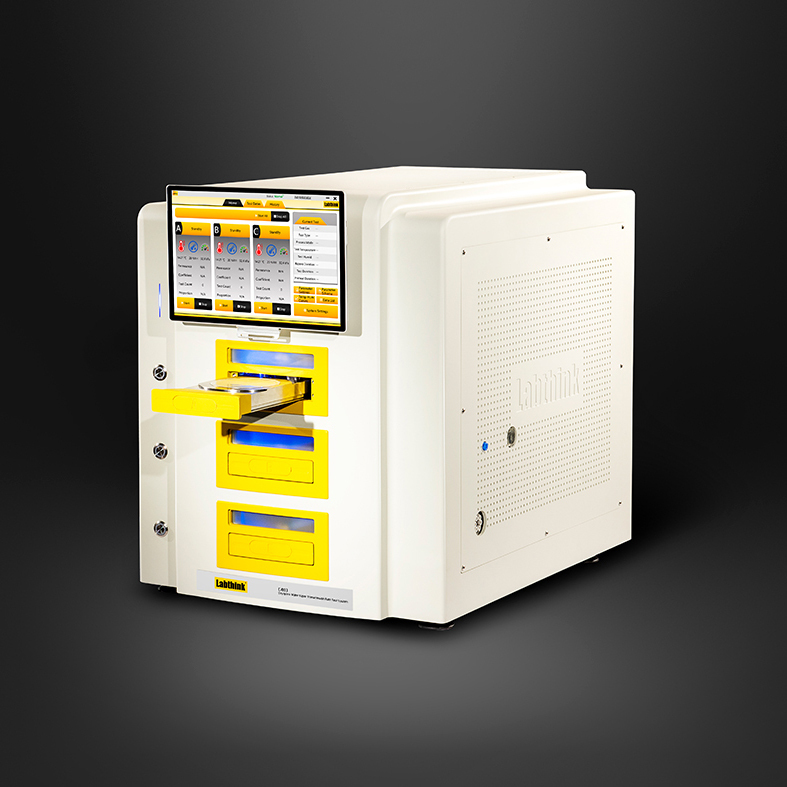
The patented three-cell integrated test block structure using advanced thermodynamics and hydrodynamics analysis greatly improves the temperature, humidity and flow measurement accuracy across the three test cells and supports simultaneous testing of three samples.
Automatic Control of Temperature, Humidity and Flow Rate
The internal temperature and humidity of the instrument are automatically adjusted with temperature and humidity sensors, maintaining the stability of the test specimen environment.
Automatic flow rate control ensures the constant flow during the testing process and minimizes any errors caused by an unstable flow rate.
Easy-to-use and High-efficiency System
The automatic test mode, combined with the instrument features, eliminates the need for manual adjustments to quickly obtain accurate results, saving training costs and releasing staff from manual monitoring so that they are available for other tasks.
The professional test mode provides flexible and rich instrument control functions to meet individual scientific research needs.
Unique, optional DataShieldTM system, meets the requirements for centralized management of user data. It supports a variety of formats of exported data. Reliable security algorithms are used to prevent data leakage. It supports universal wired and wireless LAN, optional private wireless network and third-party software.
User-oriented Service Concept
Adhering to our user-oriented service concept, Labthink has created a customization system that provides flexible and comprehensive customization services for the accommodation of non-standard specimens and packages.
Note 1: The parameters in the table are measured by professional operator in Labthink laboratory according to relative requirements for laboratory standard conditions.
Note 2: DataShieldTM provides safe and reliable data application support. Multiple Labthink instruments can share one single DataShieldTM system which can be purchase as required.
Note 3: The described product features should be in line with Table 1: Test Parameters.
Test Principle
The pre-conditioned specimen is mounted between the upper and lower chambers at ambient atmospheric pressure. The upper chamber contains oxygen or air and the lower chamber is slowly purged by a stream of nitrogen. Due to the concentration difference between the two chambers, oxygen molecules permeate through the specimen into the nitrogen side and are taken to the coulometric sensor where proportional electrical signals are generated. The oxygen transmission rate is then obtained by analyzing the signals and calculating the volume of oxygen measured by the sensor. For whole package samples, high purity nitrogen flows inside the package, and oxygen or air flows outside.
Test Standards
ASTM D3985, ASTM F1307, ASTM F1927 (option), GB/T 19789, GB/T 31354, DIN 53380-3, JIS K7126-2-B and YBB 00082003-2015
Applications
| Basic Applications |
- Films
Plastic films, paper-plastic composite films, coextruded films, aluminized films, aluminum foils, aluminum foil composite films, glass fiber aluminum foil composite films and many others
|
- Sheeting
PP, PVC and PVDC sheets, metal foils, rubber pads, silicon wafers and other sheeting materials
|
- Packages
Plastic, rubber, paper, paper-plastic composite, glass and metal packages, e.g. Coke bottles, peanut oil packages, Tetra Pak materials, vacuum bags, metal three-piece cans, plastic packages for cosmetic, soft tubes for toothpaste, jelly and yogurt cups
|
| Extended Applications |
- Closure Systems
Oxygen barrier property of various closure systems for bottles cartons and pouches.
|
- Solar Back-Sheets
Oxygen permeability test of solar back-sheets
|
- Plastic Tubes
Oxygen permeability test of various sorts of tubes, e.g cosmetic tubes.
|
- Blister Packs
Test oxygen transmission rate of the whole blister packs
|
- Automotive and Small Engine Fuel Tanks
Permeability of plastic fuel tanks.
|
- Battery Plastic Shell
Oxygen transmission rate of battery plastic shell
|
Technical Specifications
Table 1: Test Parameters Note1
| Parameter |
Model C230H |
| Test Range |
cm3/(m2d) (Standard) |
0.01 200 |
| cc/(100in2day) |
0.0007 12.9 |
| cm3/(pkgd)(Package) |
0.00005 1 |
| Resolution |
cm3/(m2day) |
0.001 |
| Repeatability |
cm3/(m2day) |
0.01 or 2% |
| Test Temperature |
C |
10 55 0.2 |
| Test Humidity |
RH |
O2: 0%, 5% 901%, 100%
Carrier Gas: 0%, 5% 902%(optional) |
| Additional Functions |
Package Test (3L Max.) |
Optional |
| DataShieldTM Note2 |
Optional |
| Computer System required by GMP |
Optional |
| CFR21 Part11 |
Optional |
Table 2: Technical Specifications
| Test Chamber |
3 test chambers |
| Specimen Size |
108 mm X 108 mm |
| Specimen Thickness |
3 mm |
| Standard Test Area |
50 cm2 |
| Carrier Gas |
99.999% High-purity Nitrogen (outside of supply scope) |
| Carrier Gas Pressure |
0.28 MPa/40.6psi |
| Port Size |
1/8 inch metal tubing |
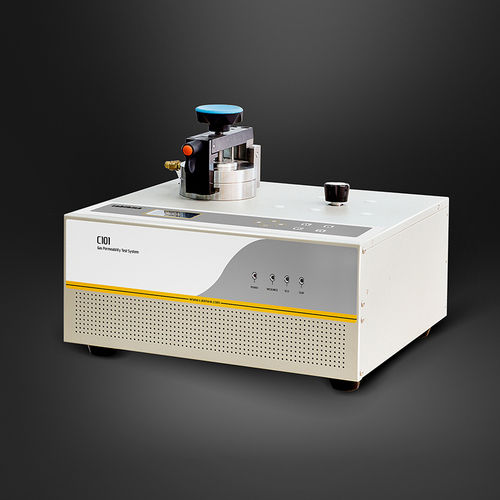
Advanced Oxygen Permeability AnalysisThis system brings unparalleled accuracy and efficiency to testing the oxygen barrier properties of packaging materials. Leveraging an electrochemical oxygen sensor and automated, programmable controls, it allows precise and customizable conditions for each evaluation. Its wide application covers films, trays, and bottles intended for protein powder storage, ensuring top-tier protection against oxygen ingress.
User-Centric Features and Data ManagementEngineered for ease of operation, the system features real-time data logging and stores up to 1000 test results. A digital LCD interface provides at-a-glance status updates, while Ethernet connectivity enables seamless remote access and control. Data can be exported quickly for analysis, and multilingual support caters to a global user base.
Safety, Compliance, and ReliabilitySafety is ensured through over-pressure and sensor fault protections, while compliance with international standards guarantees reliable test results. Programmable alarms alert users to deviations from set oxygen permeability limits, enhancing quality control. The high-grade SUS304 stainless steel design ensures long-term durability and maintains sample integrity during testing.
FAQ's of Oxygen Barrier Testing System for Protein Powder Packaging Materials:
Q: How does the Oxygen Barrier Testing System measure oxygen permeability in protein powder packaging?
A: The system utilizes a highly responsive electrochemical oxygen sensor to detect and quantify the amount of oxygen that permeates through packaging samples. By creating programmable testing conditions of temperature and humidity, it accurately replicates real-world environments and complies with international test standards.
Q: What types of packaging materials can be tested using this system?
A: This equipment is suitable for testing a wide range of packaging for protein powder, including multi-layer films, rigid trays, and plastic or composite bottles. Customizable specimen and test chamber configurations enable compatibility with diverse sample sizes and formats.
Q: When should I perform oxygen barrier testing on my packaging materials?
A: Oxygen barrier testing should be conducted throughout product development, quality assurance, and routine production phases. This ensures that packaging meets regulatory requirements and maintains product freshness by minimizing oxygen exposure.
Q: Where can the test data be accessed and how is it managed?
A: Test data is stored within the system's internal memory, with a capacity for up to 1000 results. For convenient analysis and recordkeeping, data can be exported via USB, RS232, or reviewed through Ethernet-enabled remote monitoring, ensuring secure and flexible access.
Q: What is the standard process for conducting a test using this system?
A: The user prepares a specimen, selects the desired conditions (such as temperature, humidity, and test gas flow), and initiates the test via microprocessor controls. The automated system handles the measurement and logs real-time data, providing results within seconds on the LCD display.
Q: How does this system benefit protein powder packaging manufacturers?
A: By delivering precise, repeatable measurements and supporting compliance with ASTM, ISO, and JIS standards, the system assists manufacturers in optimizing packaging designs. Reliable oxygen barrier assessments help ensure prolonged product shelf life and enhanced market competitiveness.
Q: What safety features are integrated into the Oxygen Barrier Testing System?
A: The instrument incorporates over-pressure protection and real-time sensor fault detection to safeguard both the user and the samples. Programmable alarm functions notify users of any deviations outside preset limits, ensuring a secure testing environment.
 English
 Spanish
 French
 German
 Italian
 Chinese (Simplified)
 Japanese
 Korean
 Arabic
 Portuguese










 Send Inquiry



