Product Description
Featuresnote1
Batch Testing
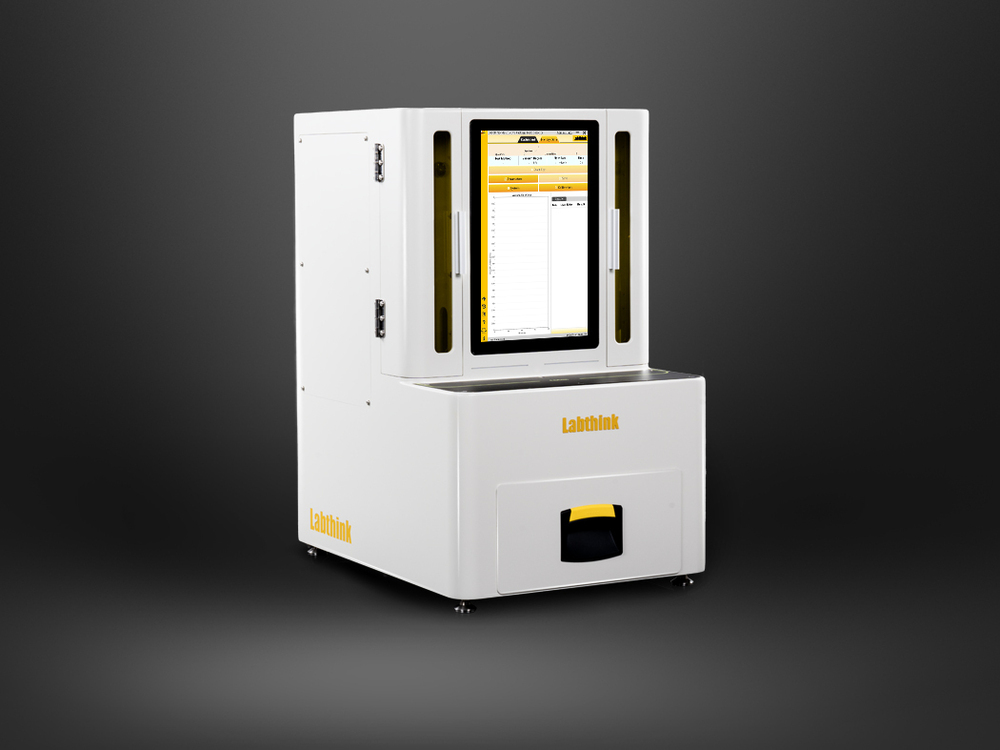
- Equipped with fully-automatic gravity fed sample feeder, which is Labthinks latest scientific and technological achievement that can facilitate continuous testing of 20 to 120 samples.
- A & B dual-channel design can test samples of two different specifications simultaneously.
- The target vacuum degree can be set by the operator to meet testing requirements of different samples.
- Dual methods of vacuum decay and pressure decay provide the flexibility to accommodate various types of package samples.
Precise Data
- Advanced pressure detection technology, using world renowned components for data stability which is not affected by ambient environment.
- Advanced microflow automatic flow control technology that can accurately simulate different sizes of leakage holes without manual adjustment.
- Both the differential pressure transducer and flow meter are traceable to NIST.
- The system can achieve a higher test repeatability of 1um.
Intelligent Control
- 15.6" embedded touch tablet computer with Windows OS.
- New longitudinal interface layout, and easy to use graphic user interface.
- Automatic alarm, automatic capture, automatic collection of unqualified samples.
- The pressure curve is displayed in real time, and the test results are counted automatically.
- Leakage rates are calculated automatically.
- The system is equipped with various sensors as intelligent reminders for safer operation and control.
- Universal printer can be connected for test results output.
- The system features embedded with USB and network ports to facilitate the external access and data transmission of the system, which can be upgraded remotely
Security Compliance
- Verified by compensation and calibration methods.
- The leak tester meets GMP requirements for data traceability and meets the needs of the pharmaceutical industry.
- User operation permission is managed at multiple levels, and the permission content can be configured on demand.
- Electronic signature is designed according to the standard requirements of 21 CFR Part11.
Test Principle
The sample is placed in the sample feeder and automatically delivered into the test cell. The leak rate and other results can be calculated and obtained by analyzing pressure changes measured by the sensor.
Reference Standards
ASTM F2338, YY-T 0681.18, and USP<1207>
Applications
| Basic Applications |
Vials |
Various vial sealing test. |
| Extended Applications |
Ampoule |
Various ampoule bottle sealing tests. |
| Cartridge Bottles |
Various cartridge bottle sealing tests. |
| Injection bottles |
Various injection bottles sealing test. |
Technical Parameters
Table 1: Test Parameters Note2
| ParameterModel |
C690H |
| Testing Range |
um(Reference aperture size USP1207) |
3i8igreat leakage |
| Detection Lower Limit |
um |
3 |
| Resolution |
um |
0.1 |
| Repeatability |
um |
1 |
| Pressure Range |
kPa |
-100i0ii14100 |
| Extended Functions |
21 CFR Part11 |
Optional |
| GMP computer system requirements |
Optional |
Table 2: Technical Specifications
| Testing Cell |
1 set for A group and 1 set for B group |
| Sample Feeder |
1 set for A group and 1 set for B group |
| Sample Size |
I45 mm80mmNote3 |
| Sample Quantity |
20120 pieces |
| Gas Specifications |
Compressed Air (Gas source is provided by the user) |
| Gas Source Pressure |
40.6 PSI / 500 kPa |
| Port Size |
I6 mm Polyurethane tube |
| Dimensions |
33.4 H x 19.6 W x 28.7 D (85cm 50cm 73cm) |
| Power |
120VAC10% 60Hz / 220VAC10% 50Hzi14select one from the twoi14 |
| Net weight |
209Lbs (95kg) |
Product Configuration
| Standard Configuration |
Mainframe, embedded tablet computer, software, flow meter, European vacuum pump, I6 mm polyurethane tube |
| Customization |
Test cell and sample feeder of group A, test cell and sample feeder of group B, negative standard reference sample and positive standard reference sample designed according to sample specifications |
| Optional Parts |
GMP computer system requirements, 21 CFR Part11, air compressor, IQ/OQ/PQ documents |
Note 1: The described product characteristics are subject to the specific annotation of the "Technical Parameters" table.
Note 2: The parameters in the table are measured in the Labthink laboratory by professional operators according to the requirements and conditions of the relevant laboratory environmental standards.
Note 3: Group C test cell can be customized for samples beyond the "Sample Size", but the lower detection limit and test range will change according to the sample size, and the actual delivery shall prevail.
Advanced Detection with Precision and ComplianceDesigned for rigorous pharmaceutical quality requirements, this equipment employs a high-sensitivity pressure decay sensor for detecting leaks in vials and blister packs. With 0.005 bar accuracy and compatibility with diverse specimen sizes-from 2mL vials to large blisters-the system ensures compliance with GMP, FDA, and ISO standards. The PLC-controlled process and automatic/manual modes streamline operations and support stringent regulatory needs for global suppliers.
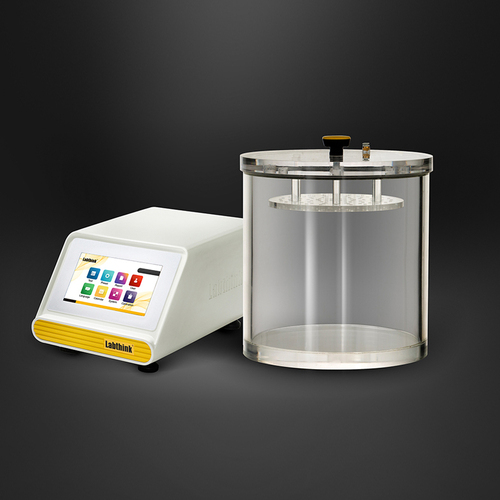
User-Friendly Operation and Data ManagementFeaturing a 7-inch color touchscreen and intuitive PLC controls, operators can easily program settings, monitor tests, and review up to 20,000 stored results. Data export through USB and Ethernet simplifies reporting and traceability. The plug-and-play design allows fast installation in cleanrooms, and multilingual support (English, Chinese, optional others) enhances accessibility for international teams.
Hygienic and Efficient MaintenanceConstructed from Grade 304 stainless steel for durability and hygiene, the system features easy-to-clean surfaces and a sanitary design-perfectly suited for pharmaceutical environments. Low maintenance needs, rapid-exchange holders, and predictive diagnostics reduce downtime, ensuring on-going efficient leak testing in busy manufacturing lines.
FAQ's of Non-destructive Leak Detecting Equipment for Pharmaceutical Vials and Blister Packs:
Q: How does the non-destructive leak detecting equipment operate for pharmaceutical vials and blister packs?
A: The equipment uses a high-sensitivity pressure decay sensor to detect leaks by applying compressed air or vacuum to the packaging. The programmable PLC system automates the process, and results are displayed on a 7-inch touchscreen, with visual and audible alarms for detected leaks.
Q: What types and sizes of specimens can be tested with this device?
A: The system accommodates glass vials, plastic vials (2mL-100mL), and aluminum/plastic blisters up to 150mm x 120mm. Customizable specimen holders allow for testing one to ten samples per cycle, making it adaptable to a wide range of pharmaceutical packaging.
Q: When and where should this leak detection equipment be used?
A: This equipment is best utilized during quality control stages in pharmaceutical manufacturing. Its cleanroom-compatible, sanitary design and plug-and-play installation make it suitable for production lines or lab environments requiring GMP, FDA, and ISO compliance.
Q: What is the process for setting up and using the equipment?
A: Simply connect to AC mains, install the unit in a cleanroom, and select desired test parameters using the touchscreen interface. Insert vials or blister packs into the rapid-exchange holders, start a test cycle (duration: 10-120s), and review leak detection outcomes alongside automatic data storage.
Q: How does the device support data management and traceability?
A: Test results (up to 20,000) are stored internally, with exports available via USB or Ethernet connections. This facilitates audit trails, traceability, and straightforward reporting required by regulatory authorities.
Q: What are the key benefits of using this leak detecting system for exporters and manufacturers?
A: Users gain reliable, non-destructive leak detection that meets international standards. The system improves product quality, reduces contamination risks, simplifies compliance, and lowers long-term maintenance with predictive diagnostics and efficient specimen handling.
Q: Is the equipment easy to clean and maintain?
A: Yes, the sanitary stainless steel (Grade 304) shell and smooth surfaces are designed for quick, thorough cleaning. Low maintenance is assured by predictive diagnostics, making the equipment ideal for continuous use in strict pharmaceutical environments.
 English
 Spanish
 French
 German
 Italian
 Chinese (Simplified)
 Japanese
 Korean
 Arabic
 Portuguese










 Send Inquiry



