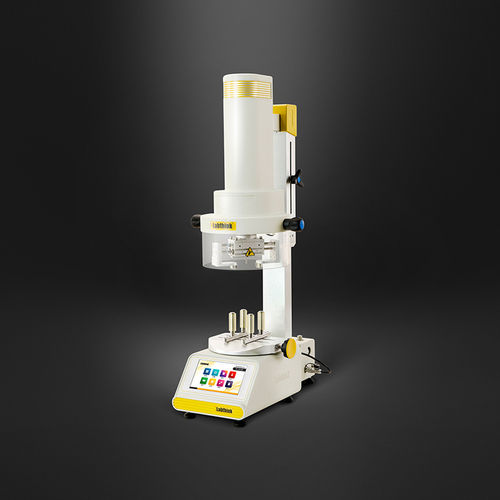
Product Description
Product FeaturesNote1
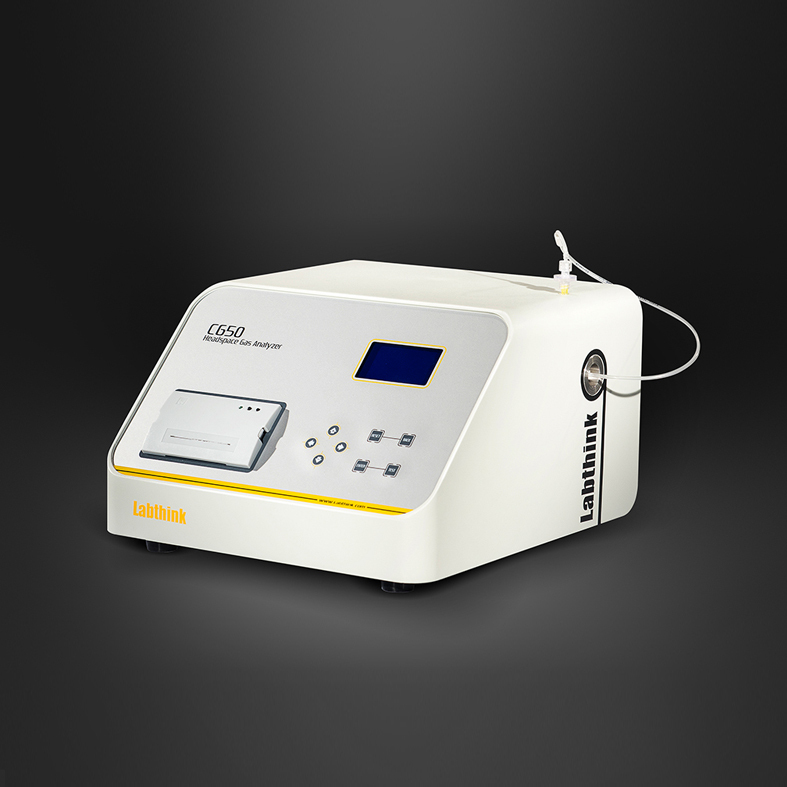
- The new ceramic oxygen sensor developed by Labthink has the characteristics of high precision and good repeatability.
- Ceramic oxygen sensor is non consumption type and has long service life.
- PC material operation panel, menu interface, LCD display, easy to operate and view the results.
- The system supports Chinese and English bilingual operating environment to meet the needs of different language users.
- The microcomputer control system can analyze and process the test data and output the report.
- It is easy to print the test results at any time with the embedded micro printer.
- The system has built-in data storage to meet the needs of large amount of data storage.
- Portable, easy to use in laboratory or production sites.
- Equipped with RS232 interface and professional software, which convenient for computer connection and data import and export.
Test Principle
The gas in the sample is pumped into the sensor through the vacuum pump, and the sensor outputs the real time current and voltage signals of O2 and CO2 (optional) concentration of the gas in the sample. The instrument calculates the content of O2 and CO2 (optional) in the gas by obtaining the current and voltage signal output by the sensor. After reaching the requirements for ending the tests, the tests stop, and the instrument records the concentration of O2 and CO2 (optional) in the gas tested in the sample.
Test Applications
| Basic Applications |
- Pouches/bags
It is suitable for the determination of O2 and CO2 (optional) content in non negative pressure pouches, packaging bags of coffee, cheese, milk tea, milk powder, bread, soybean powder, modified atmosphere packaging, ready to eat food, medicine and other non negative pressure packaging bags.
|
- Packaging Containers
It is suitable for the determination of O2 and CO2 (optional) in canned coffee, canned milk powder, canned food, cheese, canned, Tetra Pak, beverage and other packaging containers
|
| Extended Applications |
- Ampoule Bottles
It is suitable for testing the concentration of O2 and CO2 (optional) in the head gas of ampoules
|
Technical SpecificationsNote2
| Items |
Parameters |
| Type of Gas Measured |
O2 (Standard) |
CO2 (optional) |
| Measuring Range |
0.2%i21% |
2%i100% |
| Measurement Accuracy |
0.2% |
2% |
| Sample Size |
5ml (standard atmospheric pressure) |
20ml (standard atmospheric pressure) |
| Dimensions |
350mm (L) 330mm(W) 200mm(H) |
| Power Supply |
220VAC 50Hz / 120VAC 60Hz |
| Net Weight |
5.5 kg |
Product Configuration Note 1
| Standard Configuration |
Mainframe, micro printer, sampling needle, filter and gasket |
| Options |
CO2 sensor, professional software, communication cable, hard packaging sampler, underwater sampling device |
Note 1: The product functions, reference standards and configuration information are subject to the specific notes in the "Technical Parameters".
Note 2: The parameters in the table are measured by professional operators in Labthink laboratory according to the requirements and conditions of relevant laboratory environmental standards.
Ensuring Vaccine Safety Through Oxygen MonitoringMaintaining optimal oxygen levels in vaccine packaging is critical to prevent efficacy loss. This advanced Oxygen Transmission Rate Tester provides rapid, accurate detection and control through automatic calibration and a high-precision electrochemical sensor. With real-time data logging and compliance to global standards, it enables pharmaceutical manufacturers to constantly safeguard product integrity.
Intuitive Operation and Comprehensive ConnectivityThis equipment is engineered for usability and flexibility in diverse lab and industrial settings. Featuring a user-friendly, multi-language digital interface, it facilitates streamlined workflows, automated data storage, and easy integration into quality control systems through USB, Ethernet, and RS232 interfaces. Specimens can be analyzed simultaneously, maximizing throughput.
FAQ's of Controlling Oxygen Levels in Packaging Safeguarding Vaccine Efficacy:
Q: How does the electrochemical oxygen sensor control oxygen levels in vaccine packaging?
A: The electrochemical oxygen sensor continuously monitors and quantifies the oxygen transmission rate in packaging materials. By detecting oxygen permeation in real time, it enables timely adjustments to packaging processes, ensuring vaccine efficacy is preserved through optimal oxygen conditions.
Q: What is the process for data collection and storage in this device?
A: Our device comes equipped with internal memory that securely stores up to 1,000 readings. Data can be accessed and downloaded via USB or Ethernet, making it easy for quality control teams to review historical records and maintain compliance documentation.
Q: When should the calibration be performed and is it complex?
A: Calibration is handled automatically by the device's auto-calibration feature, requiring no manual intervention. The process ensures accurate readings and should be performed as scheduled by the internal program or whenever prompted by the system interface.
Q: Where can this Oxygen Transmission Rate Tester be installed and used?
A: It is designed for benchtop use in clean room and GMP-certified areas, making it ideal for both laboratory and industrial vaccine packaging environments. The equipment's robust construction is tailored for demanding pharmaceutical settings.
Q: What benefits does the visual and audible alarm system offer?
A: The integrated alarm system immediately alerts operators to oxygen threshold breaches, preventing potential compromise of vaccine efficacy. Both visual and audible notifications ensure staff in various environments promptly address any issues during critical testing.
Q: How is maintenance handled for the electrochemical sensor?
A: The tester is engineered for low maintenance and features tool-free sensor replacement, minimizing downtime. Regular maintenance checks are simple to perform, supported by onsite and remote troubleshooting for efficient problem resolution.
Q: What is the advantage of multi-channel testing and real-time monitoring?
A: Multi-channel testing allows up to six specimens to be assessed simultaneously, increasing productivity and throughput. Real-time monitoring provides instant data on oxygen levels, enabling proactive and immediate quality control adjustments.
 English
 Spanish
 French
 German
 Italian
 Chinese (Simplified)
 Japanese
 Korean
 Arabic
 Portuguese










 Send Inquiry



