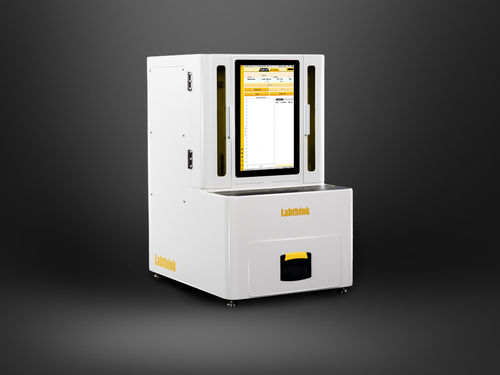
Product Description
Product FeaturesNote1
Multiple Test Modes & Intelligent Statistics of Qualified Specimens
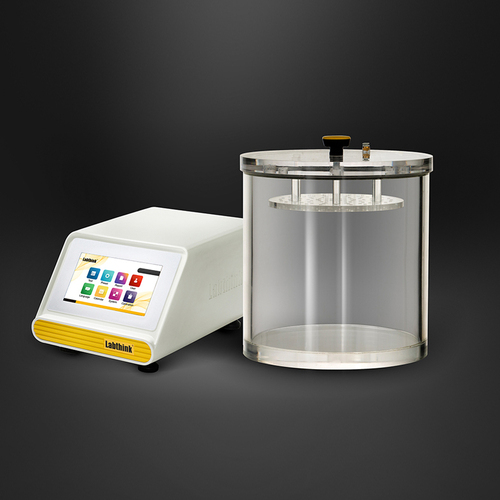
- Negative pressure method
- Multiple test modes including standard, multi-grade vacuum and methylthionine chloride mode
- Automatic test with traditional methylthionine chloride
- Vacuum degree, test time and infiltration time can be adjusted and test parameters can be saved automatically so that the tests with same test parameters can be started quickly
- Automatic constant pressure compensation ensures that the tests can be performed under preset vacuum conditions
- Real-time display of test curves, easy to observe the test results
- Automatic statistics of qualified specimens
- Main components and parts are supplied by well-known global manufacturers, with guaranteed performance
Brand New Patented Intelligent Touch Operating System
- Industrial grade touch screen, one-button operation, simplified operating interface, remote upgrade and maintenance
- Chinese and English operating interface
- Measurement unit conversion
- Automatic data storage and power failure memory to prevent data loss
- Storage up to 1200 test records (standard mode)
- Multiple-level user management and login with password
- Micro-printer and USB ports for data transmission (optional)
- The instrument conforms to the requirements of GMP (optional)
- Labthinks unique DataShiledTM System for data management and connecting with information system (optional)
Test Principle
Firstly submerge the specimen in the water in the vacuum chamber, and then evacuate the vacuum chamber to form differential pressure between the inside and outside of specimen. The seal property can be obtained by observing the steady progression of bubbles from the specimen or observing how the specimen expands and restores to its original shape after vacuum release.
Test StandardNote1
ASTM D3078, GB/T 15171
Applications
| Basic Applications |
- Glass Bottles, Pipes, Cans and Boxes
|
- Plastic Bottles, Pipes, Cans and Boxes
|
- Metal Bottles, Pipes, Cans and Boxes
|
- Paper Plastic Composite Bags and Boxes
|
| Extended Applications |
|
|
|
|
|
|
Technical Specifications
| Specifications |
C660B |
| Vacuum Degree |
0 -90 KPa/ 0 -13 psi |
| Accuracy |
0.25% FS |
| Resolution |
0.1 KPa / 0.01 psi |
Vacuum Chamber
Effective Sizes |
I270 mm x 210 mm (H) (standard) |
| I360 mm x 585 mm (H) (optional) |
| I460 mm x 330 mm (H) (optional) |
| Note: customization is available for other sizes |
| Gas Supply |
Air (outside of supply scope) |
| Gas Supply Pressure |
0.5 MPa 0.7 Mpa (73psi 101psi) |
| Instrument Dimension |
334 mm (L) x 230 mm (W) x 170 mm (H) |
| Power Supply |
220VAC10% 50Hz / 120VAC10% 60Hz |
| Net Weight |
Instrument: 6.5 kg Standard Vacuum Chamber: 9kg |
Configurations
- Standard Configurations
- Instrument, Standard Vacuum Chamber (I270 mm x 210 mm), I6 PU Tubing (1m)
- Optional Parts
- Micro Printer, Professional Software, Customized Vacuum Chamber, Air Compressor, GMP System, DataShieldTM Note3
- Note
- 1. The gas supply port of the instrument isI6 mm PU Tubing;
2. Customers need to prepare gas supply.
Note 1: The described test standard, applications and product features should be in line with Technical Specifications.
Note 2: The parameters in the table are measured by professional operators in Labthink laboratory under strictly controlled laboratory conditions.
Note 3: DataShieldTM provides safe and reliable data application support. Multiple Labthink instruments can share one single DataShieldTM system which can be configured as required.
High-Precision, Reliable Integrity TestingEquipped with a high-precision pressure sensor and vacuum accuracy of 1 mbar, this system consistently detects leaks in sterile packaging. Its intelligent calibration options and robust construction ensure accurate results across multiple tests, protecting the integrity of each package and meeting international standards.
Efficient Data Management and ComplianceStore up to 1000 results internally, with USB and RS232 connectivity for easy data transfer. Each test cycle is rapid, between 2-5 minutes, and documented with calibration certificates to support regulatory compliance. It is a crucial instrument in quality control for pharmaceutical and medical packaging.
FAQ's of Sterile Product Package Integrity Testing:
Q: How does the sterile package integrity tester detect leaks in containers?
A: The integrity tester uses vacuum decay or pressure decay methods, alongside a high-precision pressure sensor, to identify leaks by monitoring pressure changes within the 12-litre test chamber. Any deviation from the set parameters triggers the audio-visual alarm for immediate detection.
Q: What types and sizes of packaging materials can be tested with this system?
A: This device accommodates plastic, blister packs, glass vials, ampoules, syringes, and pouches up to 250 mm in size. Up to five specimens can be tested simultaneously per cycle, making it ideal for various sterile containers commonly used in pharmaceutical environments.
Q: When is calibration necessary and what options are available?
A: Calibration is essential before initial use and at routine intervals to maintain accuracy. The system supports both automatic and manual calibration and comes with a calibration certificate for regulatory documentation and traceability.
Q: Where can test results be stored and retrieved from the device?
A: Test results are saved in the device's internal memory, capable of storing up to 1000 test records. Users can access, review, or export this data using USB or RS232 interfaces, which connect easily to PCs for further analysis and reporting.
Q: What benefits does the automatic operating mode provide?
A: The automatic mode streamlines the testing process by reducing operator intervention, ensuring consistent cycle times of 2-5 minutes and minimizing the risk of user error, leading to more reliable outcomes and improved laboratory workflow.
Q: How is leak detection communicated during testing?
A: Leak detection is instantly communicated through a built-in audio-visual alarm, alerting users to any compromised package, which allows for prompt corrective actions and ensures product sterility is not compromised.
 English
 Spanish
 French
 German
 Italian
 Chinese (Simplified)
 Japanese
 Korean
 Arabic
 Portuguese








 Send Inquiry



