Product Description
Product Featuresnote1
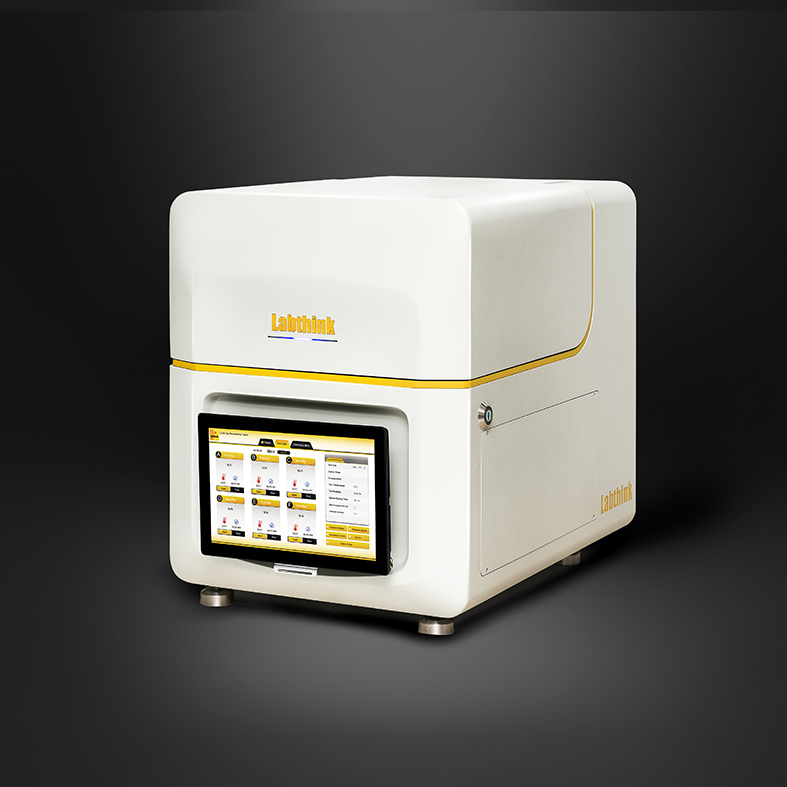
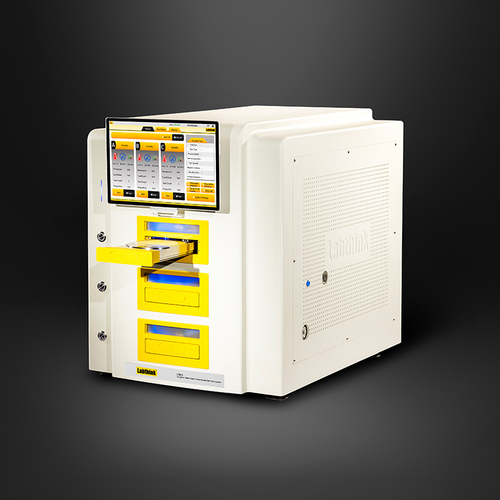
OTR/WVTR tested in One Instrument
- OTR WVTR mode, OTR mode and WVTR mode are available for selection.
- OTR and WVTR tests can be automatically completed for each sample mounting.
- Genuinely reflect the OTR WVTR performance of the same sample, avoiding effect on test data due to sample contamination arising from instrument switching.
Coulometric Oxygen Sensor
- The instrument is equipped with a ppb level Coulometric Oxygen Sensor, as one of new Labthink technical achievements, which can obtain a lower limit of the test.
- Designed according to ASTM D3985 with absolute value, and no calibration is permitted.
- Longer service life, two times longer than that of a traditional Coulometric oxygen sensor.
- Over limit alarm and automatic protection.
Infrared Moisture Sensor
- The instrument is equipped with Labthink patented infrared moisture sensor which can obtain a lower limit of the test.
- Designed according to ASTM F1249.
- Longer service life, non-consumable.
- Over limit alarm and automatic protection.
Accurate Data
- Brand new rainbow bridge structural test cell and 360 air circulation constant temperature technology ensure better temperature stability.
- In the test process, the automatic control on flow, temperature and relative humidity is realized, reaching higher accuracy.
- The test cell is equipped with a high-precision humidity sensor to monitor and record humidity changes in real time.
High Efficiency 6 Test Cells
- Independent six sets of 50cm2 standard area test cells, which is three times the traditional oxygen transmission rate test instrument.
- Six samples can be tested at the same time under the same conditions, with independent tests data.
- In the same test cycle, the number of samples completed increases from 2 to 6.
- Automatic sample clamping, saving time and effort, ensuring consistent clamping force and better sealing.
Intelligent Operation
- The 12 Inch Touch panel of windows system is used for more convenient operation.
- Automatic mode - after inputting test temperature and humidity and clicking one key, the test proceeds automatically.
- Intelligent test cell hood which opens and closes automatically with sound and light alert.
Safe and Reliable
- Safe Running: Labthinks high-end industrial computer is embedded to eliminate the system failure caused by computer virus and ensure the operation reliability and data storage security.
- Safe Operation: equipped with optical and other intelligent sensors as well as intelligent sound and light alarms to ensure the operation safety.
- Safe Performance: the instrument uses global renowned brand components with stable and reliable performance.
Space Saving
- The width of the instrument is only 1/3 of the traditional six-cell instrument, saving laboratory space.
Powerful Functions
- Professional test mode provides flexible and plentiful control functions to meet the needs of scientific research.
- Display oxygen/water vapor transmission rate curve, oxygen/water vapor transmission coefficient curve, temperature curve and humidity curve.
- Wide temperature range, allowing the barrier test at different temperatures (customized).
- The gas purification device independently developed by Labthink can remove trace oxygen in nitrogen, providing oxygen-free carrier gas (optional).
Testing Principle
The pre-treated sample is clamped between the test chambers, oxygen or nitrogen with stable relative humidity flows on one side of the film, and the high purity nitrogen flows on the other side; oxygen or water molecules diffuse through the film into high-purity nitrogen on the other side, and are carried to the sensor by the flowing nitrogen. By analyzing the oxygen or water vapor concentration measured by the sensor, the oxygen or water vapor transmission rate can be calculated.
Reference Standards
ASTM D3985, ASTM F1307, GB/T 19789, GB/T 31354, DIN 53380-3, JIS K7126-2-B, YBB 00082003-2015
ASTM F1249, ISO 15106-2, GB/T 26253, JIS K7129, YBB00092003-2015
Test Applications
| Applications |
- Films
The oxygen and water vapor transmission rate tests of various plastic films, paper-plastic composite films, co-extrusion films, aluminized films, aluminum foil composite films, glass fiber aluminum foil paper composite films and other film-like materials.
|
- Sheets
The oxygen and water vapor transmission rate tests of PP sheet, PVC sheet, PVDC sheet, metal foil, rubber sheet, silicon sheet and other sheet materials.
|
Technical Specifications
Table 1: Test Parameters Note2
| Parameter/Model |
Model C406H |
| OTR Test Range |
cc/(m2day) (Standard area 50cm2) |
0.02 200 |
| cc/(m2day) (MASK area 1cm2) |
1 10000 (Optional) |
| cc/(m2day) (MASK area 5cm2) |
0.2 2000 (Optional) |
| OTR Resolution |
cc/(m2day) |
0.0001 |
| OTR Repeatability |
cc/(m2day) |
0.02 or 1%, whichever is greater |
| WVTR Test Range |
g/(m2day) (Standard area 50cm2) |
0.02 40 |
| g/(m2day) (MASK area 5cm2) |
0.2 400 (Optional) |
| g/(m2day) (MASK area 1cm2) |
1 2000 (Optional) |
| WVTR Resolution |
g/(m2day) |
0.0001 |
| WVTR Repeatability |
g/(m2day) |
0.02 or 2%, whichever is greater |
| Temperature range |
C |
15 - 50
5 60 (Customized) |
| Temperature fluctuation |
C |
0.15 |
| Humidity range |
%RH (Within standard temperature range) |
0%, 5 - 902%, 100% |
| Extended functions |
GP-01 Gas Purification Unit |
Optional |
| DataShieldTM Note3 |
Optional |
| Computer System required by GMP |
Optional |
| CFR21 Part11 |
Optional |
Table 2: Technical Specifications
| Test Chamber |
6 test chambers |
| Specimen Size |
4.6 x 4.6i1411.7cm11.7cm) |
| Specimen Thickness |
120 Mili143mmi14 |
| Standard Test Area |
50 cm2 |
| Carrier Gas |
99.999% high purity nitrogen, 99.5% oxygen (gas source is out of supply scope) |
| Carrier Gas Pressure |
40.6 PSI / 280 kPa |
| Port Size |
1/8 inch metal tubing |
| Power Supply |
120VAC10% 60Hz / 220VAC10% 50Hzi14either one of twoi14 |
| Instrument Dimensions |
23.6 H x 19.2 W x 25.9 D (60cm 49cm 66cm) |
| Net weight |
220Lbsi14100kgi14 |
Configurations
- Standard Configurations
- Mainframe, tablet, sampler, vacuum grease, polyurethane pipe of 6 mm in diameter
- Optional Parts
- GP-01 Gas Purification Unit, air compressor, CFR21Part11, GMP computer system requirements and DataShieldTM Data ShieldNote3
- Remarks
- 1. The gas supply port of the instrument isI 6 mm polyurethane pipe (pressure 79.7 psi / 550 kPa);
2. Customers will need to prepare for gas supply and distilled water.
Note 1: All the product features are subject to detailed descriptions in the "Technical Parameters.
Note 2: The parameters in the table are measured by professional operators in Labthink Laboratory according to the requirements and conditions of relevant laboratory environmental standards.
Note 3: DataShieldTM Data Shield System provides safe and reliable data application support. The system can be shared by multiple Labthink products. Please purchase separately as needed.
Advanced Freshness-Testing CapabilitiesUtilizing high-precision strain and gas sensors, this equipment delivers reliable assessments of packaging materials' compression, tensile, and gas barrier properties. Its versatility ensures the freshness of fruits and vegetables is scientifically validated, essential for maintaining shelf life and reducing spoilage.
Efficient Data Management & Multilingual SupportThe device's USB and RS232C ports enable rapid data export, allowing seamless record keeping and analysis. Its digital LCD screen and multilingual menu system facilitate user-friendly operation for labs and manufacturers around the globe, saving time and reducing errors.
Built for Safety and PrecisionWith built-in overload and overheat protection, dust-free environment compatibility, and automatic/manual calibration, this machine maintains performance integrity and extends lifespan. Operating in temperatures from 10C to 40C, it suits a wide range of laboratory and industrial environments.
FAQ's of Testing Packaging Materials for Fruits and Vegetables Freshness:
Q: How does this equipment test packaging materials for fruits and vegetables freshness?
A: The system employs compression, tensile, and gas permeability tests using advanced strain and gas sensors to evaluate how well packaging preserves fruits and vegetables. Results reveal the barrier strength and freshness retention capabilities of various packaging materials.
Q: What types of data outputs and storage options are supported by this testing machine?
A: The device supports data export via USB and RS232C interfaces, enabling convenient storage and further analysis. It also offers direct digital readouts on an LCD screen and has an internal memory for secure data recording and retrieval.
Q: When should manufacturers use this machine in their packaging development process?
A: Manufacturers benefit most by integrating this equipment during material selection and product development phases. It helps identify optimal packaging solutions that maintain fruit and vegetable freshness before large-scale production or export.
Q: Where is the ideal location to operate this testing equipment?
A: To maintain accuracy and protect sensitive components, it is recommended to operate the machine in a dust-free, well-ventilated area with ambient conditions between 10C and 40C, and humidity levels of 30% to 85% RH.
Q: What is the process for calibrating the sensors on this device?
A: The machine offers both automatic and manual self-calibration for all high-precision sensors. Users can activate calibration from the menu system, ensuring ongoing measurement accuracy and compliance with industry standards.
Q: How do users benefit from the multiple testing modes and automation features?
A: Multiple testing modes and semi-automatic operation enable users to perform various tests efficiently and reliably without extensive manual intervention, improving productivity and ensuring standardized, repeatable results.
Q: What are the primary advantages of using this equipment for laboratories and industrial applications?
A: Key benefits include precise measurement of freshness-retaining ability, compliance with ASTM and ISO standards, fast response times, multilingual support, overload protection, and ease of data management, all of which enhance quality control and product development workflows.
 English
 Spanish
 French
 German
 Italian
 Chinese (Simplified)
 Japanese
 Korean
 Arabic
 Portuguese










 Send Inquiry



