Product Description
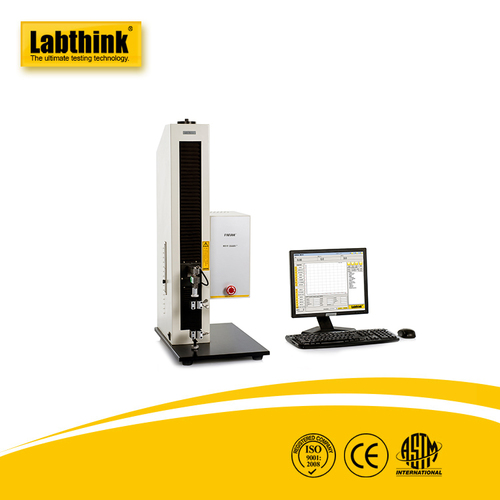
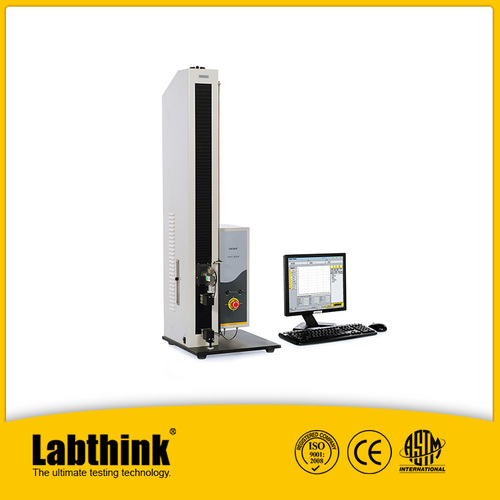
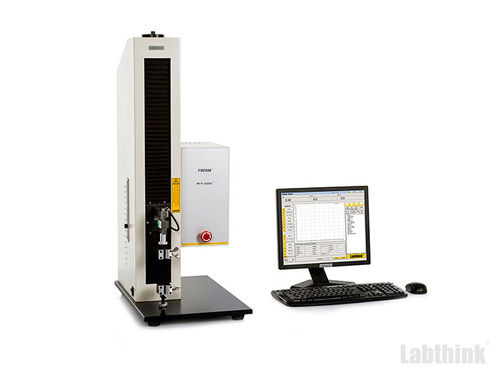
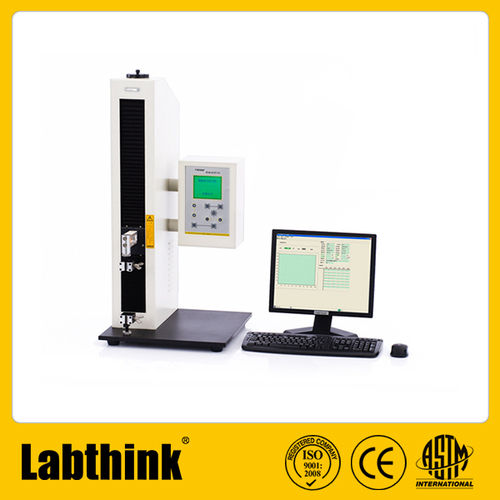
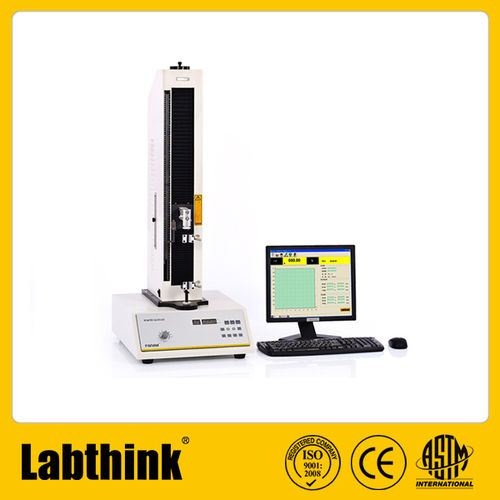
MED-01 Penetration Resistance Tester is to measure force properties of various medical packaging materials.
It comforms to ISO 37,ASTM E4, ASTM D882, ASTM D1938, ASTM D3330, ASTM F88, ASTM F904. The instrument is designed with 16 independent test modes and bidirectional test mode of stretching and compression, which can meet various test requirements.
Features:
- Better than 0.5% of full scale
- 16 independent test modes
- Computer controled
- Historical data back up
Technical Specifications
| Load Cell Capacity | 250 N (standard) |
| 50 N, 100 N, 500 N (optional) |
| Accuracy | Better than 0.5% FS |
| Test Speed | Forward:10, 50, 100, 150, 200, 300 mm/min (standard) |
| Backward:10, 50, 100, 150, 200, 300 mm/min (standard) |
| Number of Specimens | 1 |
| Specimen Width | 30 mm (Standard Grip) |
| 50 mm (Optional Grip) |
| Clamping Way | Manual Specimen Clamp |
| Stroke | 600 mm |
| Instrument Dimension | 365 mm (L) x 585 mm (W) x 960 mm (H) |
| Power Supply | AC 220V 50Hz |
| Net Weight | 68 kg |
Comprehensive Penetration Testing for Medical PackagingThe device ensures reliable integrity assessment for sterile medical packs, blister packs, and pouches. Employing customizable probes and adjustable speeds, it tests a wide range of materials in accordance with international standards. Its advanced data management and high accuracy serve medical manufacturers and suppliers seeking dependable quality control solutions.
User-Friendly Interface and Enhanced SafetyWith a real-time digital LCD and multi-language support, users benefit from accessible operation and streamlined data retrieval. Safety is prioritized with features like overload protection and emergency stop, minimizing risks during testing. The units automatic and manual calibration options contribute to consistent, validated performance.
FAQs of Medical Package Penetration Resistance Tester:
Q: How does the Medical Package Penetration Resistance Tester evaluate packaging integrity?
A: It measures penetration resistance by driving a probe of specified diameter (1mm, 2mm, or customized) at adjustable speeds (10500 mm/min) into medical packaging, recording the force needed to penetrate. This quantifies the packs protective strength in real time, ensuring compliance with ASTM F1306 and EN ISO 11607-1 standards.
Q: What types of medical packaging can be tested with this device?
A: The tester accommodates sterile medical packs, blister packs, and pouches thanks to universal adjustable clamps. Custom probe diameters allow evaluation of various materials and packing formats, making it suitable for manufacturers, exporters, and suppliers.
Q: When should calibration be performed on the tester, and what methods are available?
A: Calibration should be performed before initial use, periodically as specified by your quality protocols, or after maintenance. Users can select either automatic or manual calibration to ensure measurement accuracy and operational reliability.
Q: Where can the penetration resistance tester be used, considering its size and operating conditions?
A: The units medium benchtop size and durable stainless steel construction make it ideal for laboratory, production, and quality control environments. It operates within a temperature range of 1040C and relative humidity up to 85%, suitable for typical facility conditions.
Q: What is the process for running a penetration resistance test on a sample?
A: First, secure the sample using universal adjustable clamps. Select probe diameter and adjust test speed according to requirements. The tester then inserts the probe, records force via a digital microprocessor, and displays real-time results on the LCD. Data is saved or exported via USB/RS232 for documentation.
Q: How does using this tester benefit medical packaging manufacturers and suppliers?
A: Manufacturers and suppliers gain consistent, high-precision results (0.1N accuracy) and swift test cyclesenhancing product reliability and compliance. Integrated safety features and user-friendly controls simplify operation, while multi-language support and versatile output streamline global quality assurance processes.
 English
 Spanish
 French
 German
 Italian
 Chinese (Simplified)
 Japanese
 Korean
 Arabic
 Portuguese








 Send Inquiry



