Product Description
Product Features
- Gas transmission rate, solubility coefficient, diffusion coefficient and permeability coefficient of the specimen could be obtained at one operation
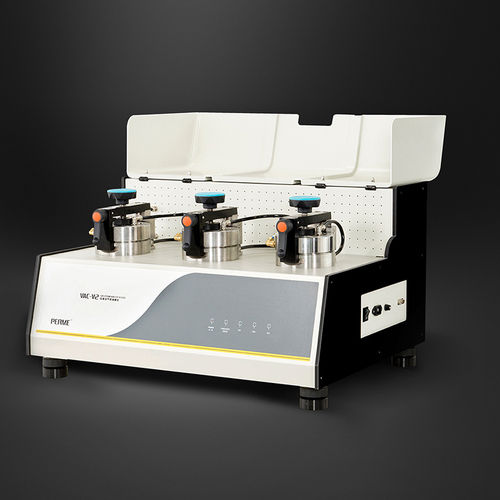
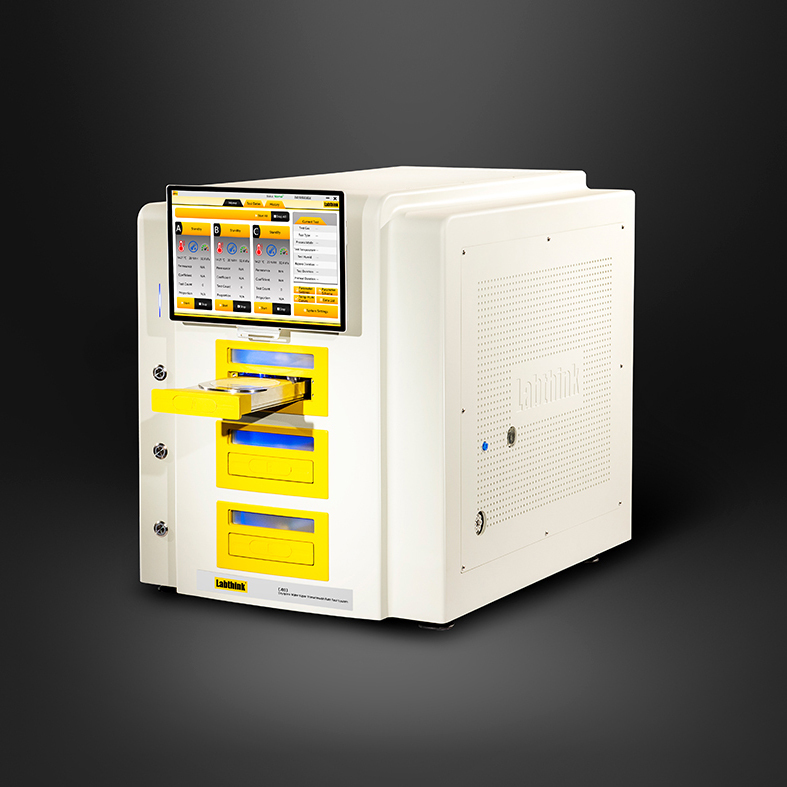
- 3 distinct or equivalent specimens could be tested individually with independent test results at one operation
- Wide range and high precision temperature and humidity control to meet various test conditions
- The instrument comes with two test modes: proportional mode and standard mode
- Test range could be extended based on user requirements to test the materials with high permeability
- Test results could be easily obtained even at extreme condition by data fitting function, which could work at any temperature
- The instrument could be used to test poisonous, inflammable, and explosive gases (customization required)
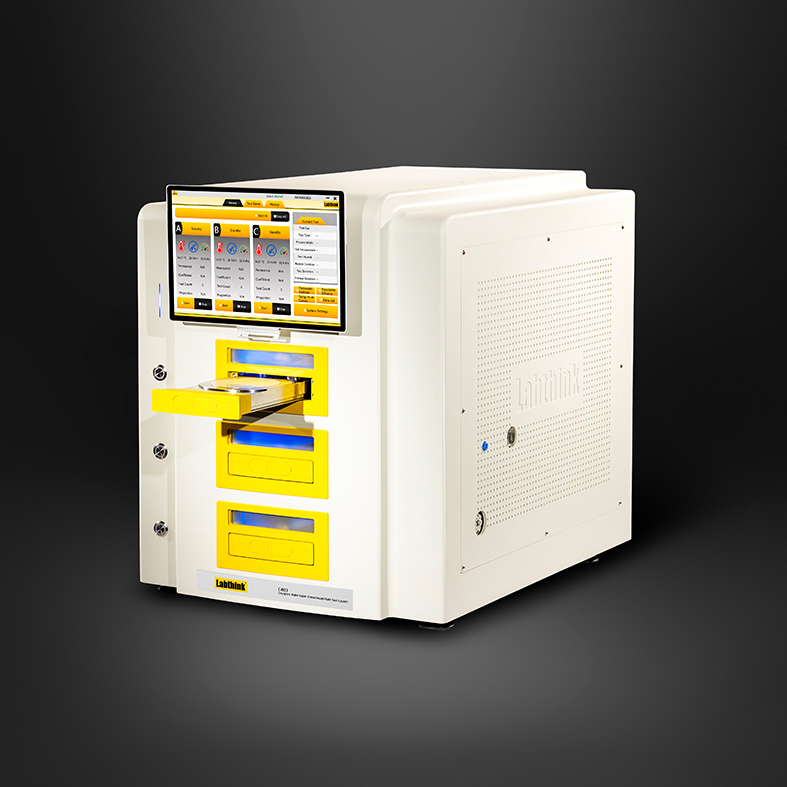
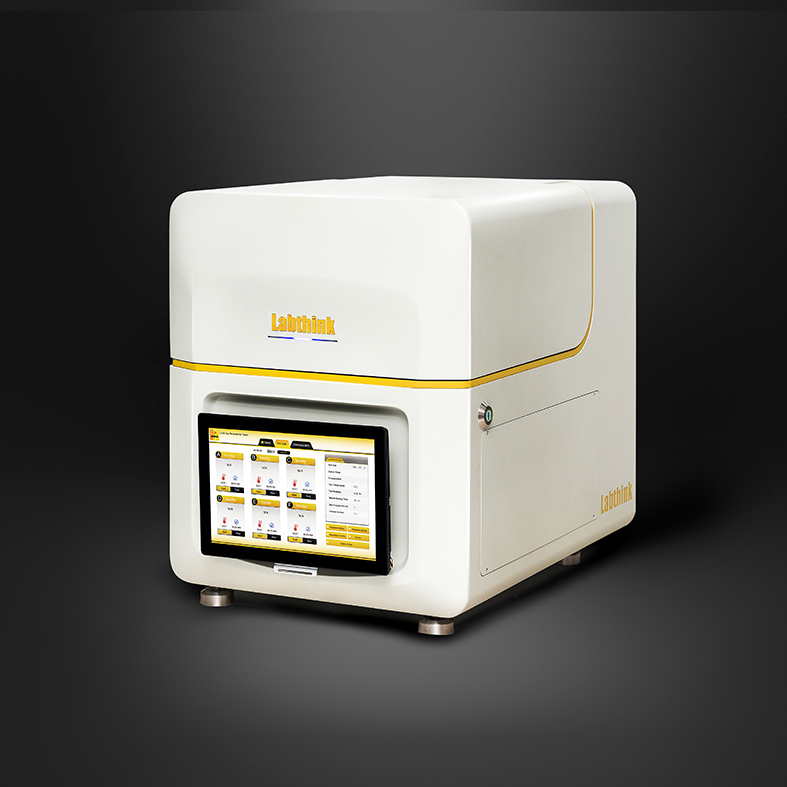
- The instrument is controlled by computer and test process is automatic
- Reference film for fast calibration to ensure accurate and universal test data
- Standard RS232 port for convenient data transfer
- Supports LystemTM Lab Data Sharing System for uniform management of test results and test reports
Principle
The pre-conditioned specimen is mounted in the gas diffusion cell as to form a sealed barrier between two chambers. The lower-pressure chamber is firstly evacuated, followed by the evacuation of the entire cell. A flow of gas is thereafter introduced into the evacuated higher-pressure chamber and a constant pressure difference is generated between two chambers. The gas permeates through the specimen from the higher pressure side into the lower side. The gas permeability and other barrier properties of the specimen can be obtained by monitoring the pressure changes in the lower chamber
Standards
This test instrument conforms to the following standards:
ISO 15105-1, ISO 2556, GB/T 1038-2000, ASTM D1434, JIS K7126-1, YBB 00082003
Applications
This test instrument is applicable to the determination of gas permeability of:
| Basic Applications |
- Films
Including plastic films, plastic composite films, paper-plastic composite films, coextruded films, aluminized films, aluminum foils, aluminum foil composite films and many others
|
- Sheeting
Including engineering plastics, rubber and building materials, e.g. PP, PVC and PVDC
|
| Extended Applications |
- Various Gases
Test the permeability of various types of gases, e.g. O2, CO2, N2, Air and He
|
- Inflammable, Explosive Gases
Test the permeability of inflammable and explosive gases
|
- Biodegradable Films
Test gas permeability of various sorts of biodegradable films, e.g. starch-based biodegradable bags
|
- Materials for Aerospace Usage
This instrument can test the Helium permeability of airship gas bags
|
- Paper and Paper Board
Test gas permeability of paper and paper-plastic composite materials, e.g. aluminized paper for cigarette packages, Tetra Pak sheeting, paper bowls for instant noodles and disposable paper cups
|
- Paint Films
Test gas permeability of substrates coated paint films
|
- Glass Fiber Cloth and Paper
Including glass fiber cloth and paper materials, e.g. Teflon paint cloth, Teflon welding cloth and Teflon silicon rubber cloth
|
- Soft Tube Materials for Cosmetics
Including various types of cosmetic tubes, aluminum-plastic tubes and toothpaste tubes
|
- Rubber Sheeting
Including various sorts of rubber sheeting, e.g. car tires
|
Technical Specifications
| Specifications |
Film Test |
| Test Range |
0.0550,000 cm3/m224h0.1MPa (standard volume) |
| At least 500,000 cm3/m224h0.1MPa (extended volume) |
| Number of Specimens |
3 (with independent test results) |
| Vacuum Resolution |
0.1 Pa |
| Vacuum Degree of Test Chamber |
<20 Pa |
| Temperature |
5C 95C |
| Accuracy |
0.1C (standard) |
| Humidity |
0%RH, 5%RHi95%RH
(automatic humidification function under 1040 can be customized) |
| Accuracy |
1%RH |
| Specimen Size |
I97 mm |
| Test Area |
38.48 cm2 |
| Test Gas |
O2, N2 and CO2 (outside of supply scope) |
| Test Pressure |
-0.1 MPa +0.1 MPa |
| Gas Supply Pressure |
0.4 MPa 0.6 MPa |
| Port Size |
I6 mm PU Tubing |
| Instrument Dimension |
760 mm (L) x 575 mm (W) x 450 mm (H) |
| Power Supply |
220VAC 50Hz / 120VAC 60Hz |
| Net Weight |
88 kg |
Configurations
- Standard Configurations
- Instrument, Constant Temperature Control Device, Professional Software, Round Sample Cutter, Vacuum Grease, Fast Quantitative Filter Paper and Vacuum Pump(Imported)
- Optional Parts
- Blades for Sample Cutter, Vacuum Grease, Vacuum Pump Oil, Fast Quantitative Filter Paper
- Note
- 1. The gas supply port of the instrument is I6 mm PU tubing;
2. Customers will need to prepare for gas supply and distilled water.
High Standards for Laboratory TestingThis Nitrogen Permeability Tester is manufactured to comply with rigorous international standards, including ASTM D1434 and ISO 15105. Its electrochemical gas sensor delivers precise and repeatable measurements, making it suitable for advanced research and industrial quality control.
Comprehensive Control and Safety FeaturesEquipped with digital microprocessor control, over-pressure protection, and leak alarms, the instrument ensures both operational reliability and user safety. Data storage for up to 1000 test records facilitates easy tracking, while intuitive auto-calibration minimizes user intervention.
Versatile Applications in Rubber and Polymer AnalysisEngineered for testing the gas permeability of rubber and polymer films, this tester accommodates multiple sample sizes and hardness levels, including 40-90 Shore A specimens. Its integrated humidity and temperature control further enhances the reproducibility of test results in laboratory environments.
FAQ's of Testing Instrument for Nitrogen Permeability of Rubber:
Q: How does the Nitrogen Permeability Tester operate to measure gas permeability in rubber samples?
A: The instrument utilizes an electrochemical gas sensor to detect and quantify the amount of nitrogen or oxygen passing through the rubber sample under controlled conditions. Both humidity and temperature can be adjusted, and testing is executed in either continuous or intermittent modes, with data digitally recorded for analysis.
Q: What are the key compliance standards met by this equipment?
A: This tester is fully compliant with ASTM D1434 and ISO 15105 standards, ensuring the results are reliable and recognized internationally for rubber and polymer permeability analysis.
Q: When should calibration be performed, and how is it conducted?
A: Calibration can be executed automatically or manually, depending on operational requirements. It is advisable to calibrate before starting a test sequence or after extended periods of use to maintain measurement accuracy. The auto-calibration function streamlines this process for users.
Q: Where can this permeability tester be utilized most effectively?
A: Ideal for laboratory settings, especially in research institutions, quality assurance labs, and industrial facilities engaged in rubber or polymer film development and testing. Its benchtop design and semi-automatic functions are best suited for controlled environments.
Q: What process does the instrument follow to ensure test accuracy and safety?
A: The device integrates over-pressure protection, a leak alarm system, and digital microprocessor control to ensure measurements are both safe and consistently precise. Adjustable test parameters and real-time monitoring further minimize risks and errors.
Q: How does data storage and software compatibility benefit laboratory workflows?
A: With capacity for up to 1000 test records and interfaces including RS232 and USB ports, test data can be efficiently stored, transferred, and analyzed. Compatibility with Windows and MacOS platforms facilitates seamless integration into diverse laboratory data management systems.
Q: What are the primary benefits of using this Nitrogen Permeability Tester for polymer analysis?
A: Key advantages include high accuracy (1% FS), fast response time (<3 seconds), the ability to test multiple specimens simultaneously, customizable conditioning settings, and robust safety features - all of which streamline testing, bolster data reliability, and support advanced materials research.
 English
 Spanish
 French
 German
 Italian
 Chinese (Simplified)
 Japanese
 Korean
 Arabic
 Portuguese












 Send Inquiry



