Product Description
Product FeaturesNote1
Multiple Test Modes & Intelligent Statistics of Qualified Specimens
- Negative pressure method
- Multiple test modes including standard, multi-grade vacuum and methylthionine chloride mode
- Automatic test with traditional methylthionine chloride
- Vacuum degree, test time and infiltration time can be adjusted and test parameters can be saved automatically so that the tests with same test parameters can be started quickly
- Automatic constant pressure compensation ensures that the tests can be performed under preset vacuum conditions
- Real-time display of test curves, easy to observe the test results
- Automatic statistics of qualified specimens
- Main components and parts are supplied by well-known global manufacturers, with guaranteed performance
Brand New Patented Intelligent Touch Operating System
- Industrial grade touch screen, one-button operation, simplified operating interface, remote upgrade and maintenance
- Chinese and English operating interface
- Measurement unit conversion
- Automatic data storage and power failure memory to prevent data loss
- Storage up to 1200 test records (standard mode)
- Multiple-level user management and login with password
- Micro-printer and USB ports for data transmission (optional)
- The instrument conforms to the requirements of GMP (optional)
- Labthinks unique DataShiledTM System for data management and connecting with information system (optional)
Test Principle
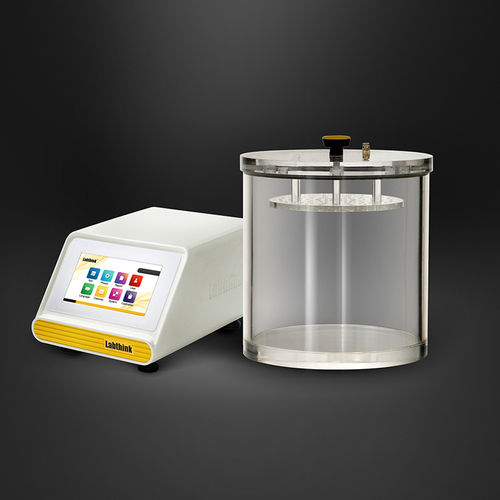
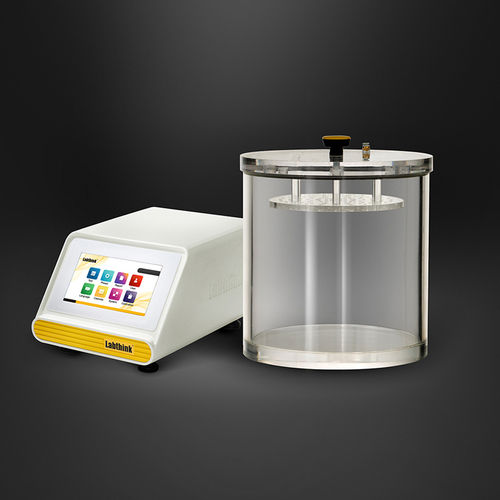
Firstly submerge the specimen in the water in the vacuum chamber, and then evacuate the vacuum chamber to form differential pressure between the inside and outside of specimen. The seal property can be obtained by observing the steady progression of bubbles from the specimen or observing how the specimen expands and restores to its original shape after vacuum release.
Test StandardNote1
ASTM D3078, GB/T 15171
Applications
| Basic Applications |
- Glass Bottles, Pipes, Cans and Boxes
|
- Plastic Bottles, Pipes, Cans and Boxes
|
- Metal Bottles, Pipes, Cans and Boxes
|
- Paper Plastic Composite Bags and Boxes
|
| Extended Applications |
|
|
|
|
|
|
Technical Specifications
| Specifications |
C660B |
| Vacuum Degree |
0 -90 KPa/ 0 -13 psi |
| Accuracy |
0.25% FS |
| Resolution |
0.1 KPa / 0.01 psi |
Vacuum Chamber
Effective Sizes |
I270 mm x 210 mm (H) (standard) |
| I360 mm x 585 mm (H) (optional) |
| I460 mm x 330 mm (H) (optional) |
| Note: customization is available for other sizes |
| Gas Supply |
Air (outside of supply scope) |
| Gas Supply Pressure |
0.5 MPa 0.7 Mpa (73psi 101psi) |
| Instrument Dimension |
334 mm (L) x 230 mm (W) x 170 mm (H) |
| Power Supply |
220VAC10% 50Hz / 120VAC10% 60Hz |
| Net Weight |
Instrument: 6.5 kg Standard Vacuum Chamber: 9kg |
Configurations
- Standard Configurations
- Instrument, Standard Vacuum Chamber (I270 mm x 210 mm), I6 PU Tubing (1m)
- Optional Parts
- Micro Printer, Professional Software, Customized Vacuum Chamber, Air Compressor, GMP System, DataShieldTM Note3
- Note
- 1. The gas supply port of the instrument isI6 mm PU Tubing;
2. Customers need to prepare gas supply.
Note 1: The described test standard, applications and product features should be in line with Technical Specifications.
Note 2: The parameters in the table are measured by professional operators in Labthink laboratory under strictly controlled laboratory conditions.
Note 3: DataShieldTM provides safe and reliable data application support. Multiple Labthink instruments can share one single DataShieldTM system which can be configured as required.
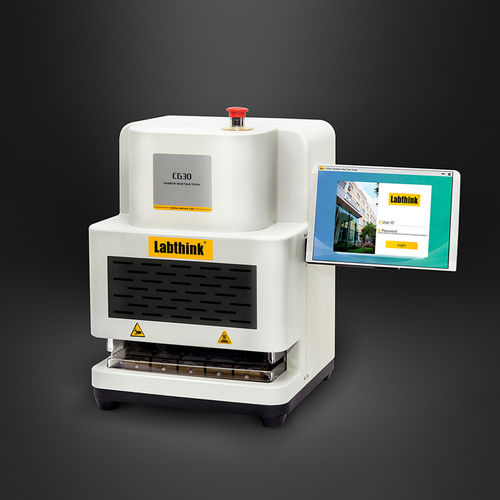
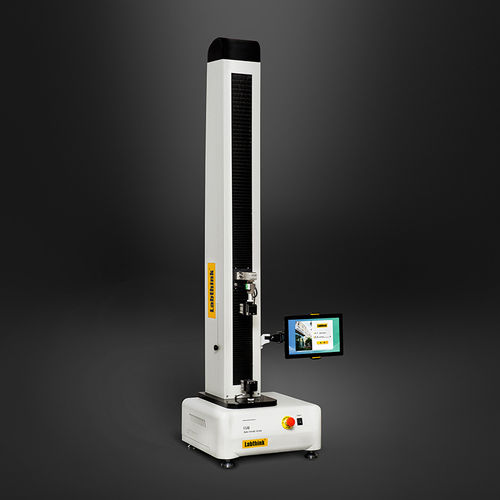
Advanced Packaging Seal TestingThe Seal Integrity Tester is specially designed to verify the seal integrity on chocolate packaging boxes, essential for maintaining freshness and preventing contamination. With its pneumatically assisted mechanism and microcomputer control, users can ensure every package meets industry standards. The digital LCD display and automatic overload protection make operation secure and straightforward, promoting efficiency in quality control processes.
Precision and Compliance for Food PackagingManufactured from stainless steel and aluminum alloy, this instrument is built for durability and compliance. Adhering to ASTM F88/F88M standards, it guarantees reliable measurements for seal strength. Its pre-calibrated settings and 1% accuracy facilitate trustworthy results, making it a preferred choice for food packaging companies aiming to uphold stringent safety and quality protocols.
FAQ's of Method and Instrument Testing Chocolate Packaging Seal Integrity:
Q: How does the Seal Integrity Tester evaluate chocolate packaging seals?
A: The tester measures the strength of seals by applying controlled pneumatic force and recording the response using a digital LCD display. It accurately determines if the packaging meets the required integrity standards, helping prevent product spoilage.
Q: What materials is the equipment constructed from and why?
A: The tester is made from stainless steel and aluminum alloy, providing robust durability, corrosion resistance, and ensuring sanitary conditions ideal for food-packaging environments.
Q: When should I perform seal integrity tests on chocolate packaging?
A: Testing should be conducted during quality control checks before shipment and throughout manufacturing, particularly when switching materials or suppliers, to ensure consistent sealing performance and compliance.
Q: Where is this tester typically used within the production process?
A: The instrument is commonly installed on benchtops within quality assurance labs or packaging lines in chocolate and confectionery production facilities to verify packaging integrity systematically.
Q: What is the procedure for operating the Seal Integrity Tester?
A: To use, secure the customized specimen in the fixture, set the desired test conditions via the microcomputer control, and initiate the test. Results are shown instantly on the digital LCD display, and the automatic overload protection ensures safe usage.
Q: How does this equipment benefit chocolate producers?
A: It ensures each chocolate box is securely sealed, thus maintaining product freshness, extending shelf life, reducing recall risks, and safeguarding consumer trust by complying with recognized industry standards.
 English
 Spanish
 French
 German
 Italian
 Chinese (Simplified)
 Japanese
 Korean
 Arabic
 Portuguese










 Send Inquiry



