Product Description
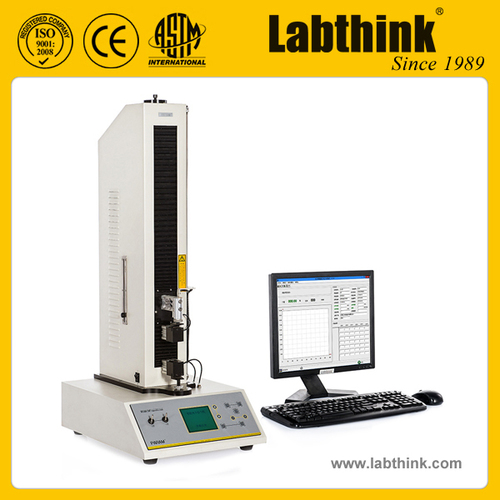
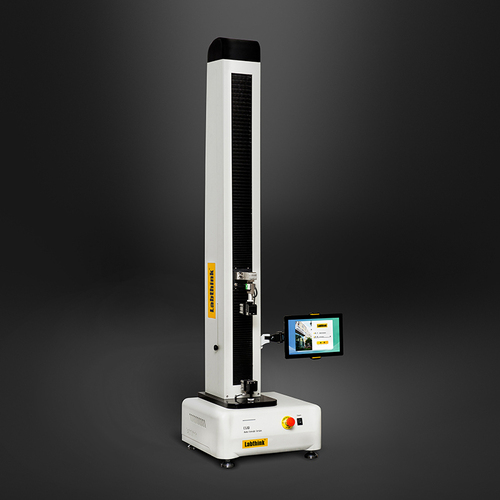
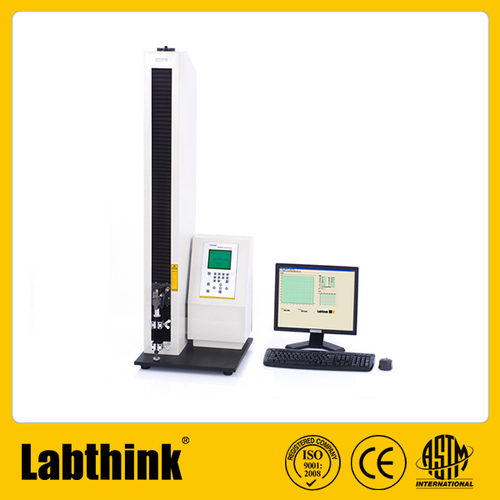
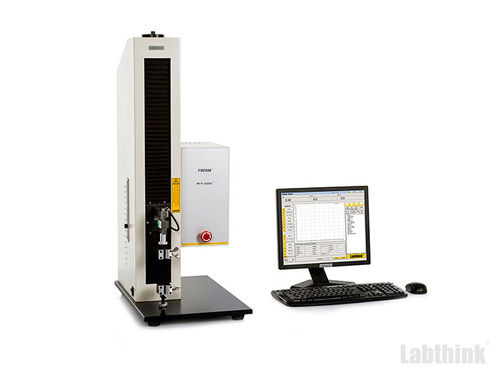
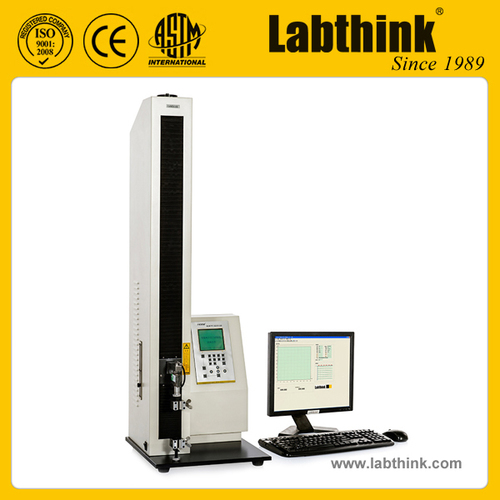
XLW (M) Shear Strength Testing Machine can be used to measure physical mechanical properties of plastic films, laminated materials, adhesives, adhesive tapes, adhesive bandage (plaster), release paper, protective films, leather, rubber and paper fiber, etc.
It can perform test items of shear, tensile, peeling, deformation, tearing, heat seal, adhesive, and open force, etc.
Technical Specifications:
| Specifications | XLW (M) |
| Load Cell Capacity | 100 N, 200 N, 500 N (one of them is available) |
| Accuracy | 1% FS |
| Test Speed | 50, 100, 150, 200, 250, 300, 500 mm/min |
| Number of Specimens | 1 |
| Specimen Width | 30 mm (Standard Grip) |
|
| 50 mm (Optional Grip) |
| Clamping Way | Pneumatic Specimen Clamp |
| Stroke | 600 mm |
| Pressure of Gas Supply | 0.5 MPa~0.7 MPa (outside of supply scope) |
| Port Size | 4 mm PU Tubing |
| Instrument Dimension | 450 mm (L) x 580 mm (W) x 1100 mm (H) |
| Power Supply | AC 220V 50Hz |
| Net Weight | 60 kg |
High-Performance Materials TestingThis Shear Strength Testing Machine provides reliable, repeatable results for a broad range of materials. Engineered for quality control laboratories and research settings, its heavy-duty mild steel frame and hardened steel jaws ensure long-term performance and durability. Factory calibration and compliance with IS, ASTM, and IEC standards guarantee trustworthy measurements in diverse industrial applications.
Intuitive Operation & FlexibilityFeaturing a digital control panel and LED display, this machine is user-friendlysupporting both manual and automatic operation modes. Its interchangeable shear fixtures allow for quick adaptation to different testing requirements. With a test speed of 50 mm/min and precise force measurement, it streamlines your workflow and maximizes testing efficiency for research or quality assurance teams.
Robust Design & SafetyDesigned with operator safety in mind, the machine incorporates effective overload protection and sturdy insulation using mild steel. Its bench-top size and manageable weight make it easy to integrate into most laboratory environments without compromising on strength or accuracy. Stable at an ambient temperature range of 10C to 40C, this instrument is both reliable and safe to use.
FAQs of Shear Strength Testing Machine:
Q: How does the Shear Strength Testing Machine ensure accurate results?
A: The machine employs an advanced load cell sensor with 1% accuracy and comes factory calibrated to IS, ASTM, and IEC standards. Its digital control panel and LED display allow real-time monitoring, enhancing precision during each test.
Q: What is the typical process for conducting a shear strength test with this machine?
A: The test involves securely placing the material sample within hardened steel jaws, selecting the appropriate interchangeable shear fixture, and setting the test parameters on the digital control panel. The machine then applies force at 50 mm/min until shearing occurs, with results displayed digitally.
Q: When is manual versus automatic operation mode preferable?
A: Manual mode is beneficial for specialized or customized tests requiring human oversight, while automatic mode is ideal for routine, high-volume testing, enabling consistent results and improved efficiency.
Q: Where can this Shear Strength Testing Machine be effectively utilized?
A: Its ideally suited for quality control laboratories, R&D departments, and educational institutions requiring reliable shear testing of various materials in environments with ambient temperatures between 10C and 40C.
Q: What types of materials and applications is this machine designed for?
A: This machine is built to test the shear strength of diverse materials, such as metals, polymers, composites, and other engineering materials, making it useful for product development, material selection, and quality verification.
Q: How does overload protection function in this equipment?
A: Overload protection mechanisms are integrated to prevent machine damage or operator injury by halting operation when applied loads exceed the safe threshold, thereby ensuring safe and prolonged instrument life.
Q: What are the benefits of using interchangeable shear fixtures?
A: Interchangeable shear fixtures increase versatility, allowing the same instrument to test samples of different sizes and shapes, adapt to multiple standards, and improve convenience for high-throughput laboratory settings.
 English
 Spanish
 French
 German
 Italian
 Chinese (Simplified)
 Japanese
 Korean
 Arabic
 Portuguese








 Send Inquiry



