Product Description
Features
Professional
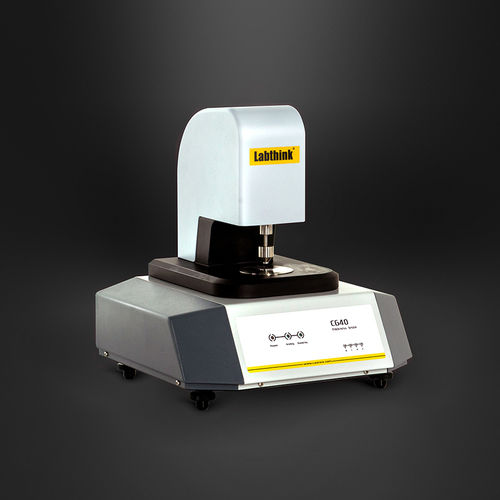
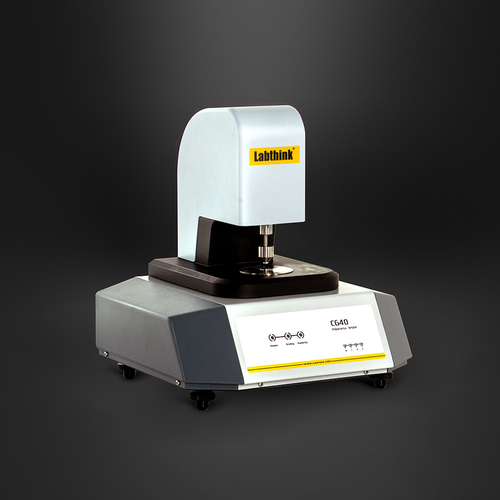
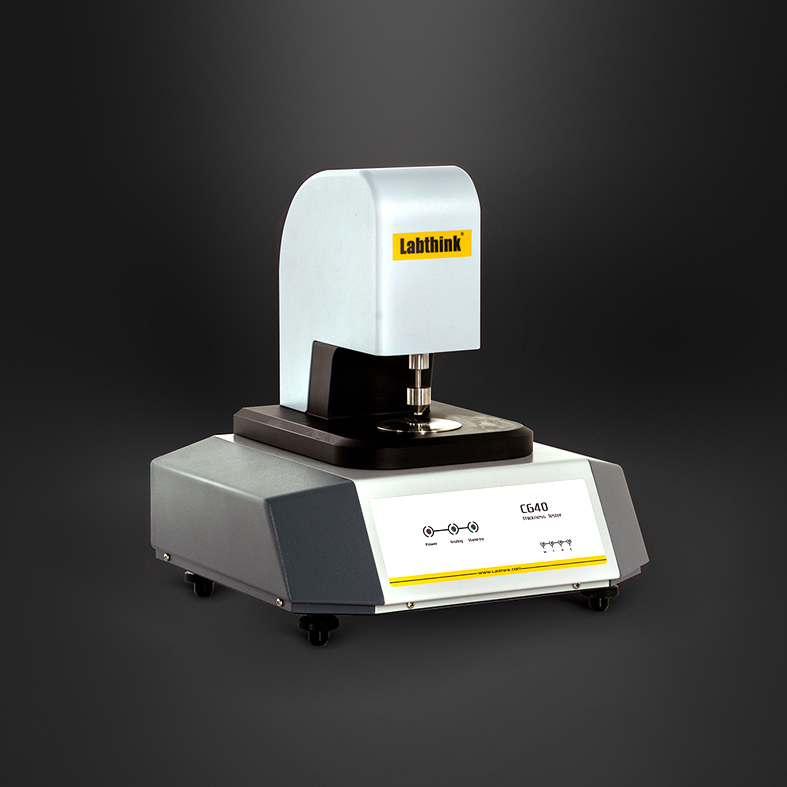
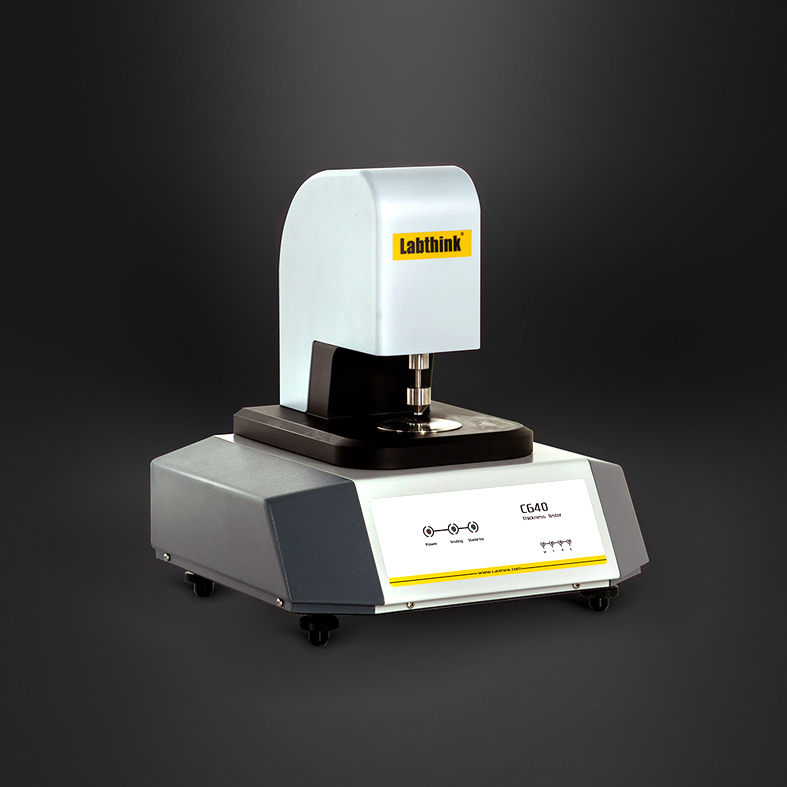
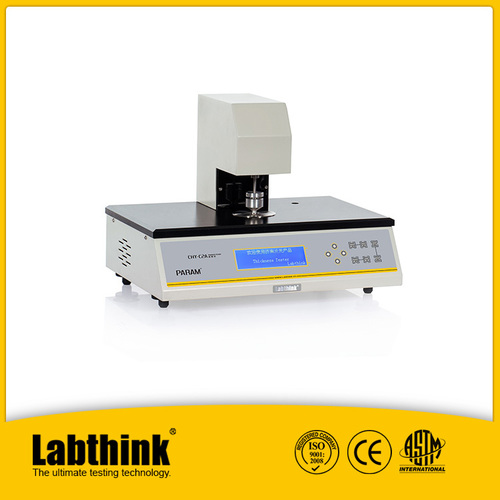
With innovative research and development, Labthink C640 Thickness Tester uses high precision displacement sensor, supported by scientific structure and professional control technology, which makes C640 greatly improved in stability, repeatabilityNote1 and accuracy.
- The instrument conforms to standards for mechanical contact method. The pressure foot can be lifted and lowered automatically, which can minimize the errors caused by human operation.
- Contacting time and test speed can be set as required. Customization is available for multiple contact areas and pressures, which can meet the requirements for various test conditions.
- Manual and automatic test modes can be selected by the users
- Calibration of multiple points can improve the linearity of the whole test range, which ensures the accuracy of measured results.
- Standard gauge block is available for fast calibration
High Efficiency
The instrument is featured with high efficiency and automatic design of structure, which minimize the human operation in measuring process. Intelligent controlling and data processing functions make it easy and reliable for test operation and data processing.
- Parameter program function enables the user to save all test parameters in a file so that those parameters can be applied directly for the same tests next time, which can help the user save time and minimize the error when inputting parameters manually.
- Test results include maximum value, minimum value, average value and standard variation, which can be displayed to the user directly.
- Result comparison function can help the user in evaluation of results.
- Auto sampling function (optional), feeding space, feeding speed, measure points can be set as required, which ensures the accuracy of multiple successive points measurement.
Intelligent
The instrument is embedded with Labthinks latest operating software, which is featured with user-friendly interface, intelligent data processing, strict user management and secure data storage. It also supports Labthink exclusive DataShieldTM (Optional) which provides the users with safe and reliable management of test data and test reports.
- Test data can be displayed in various forms including curves and data list
- Test data will be saved and encrypted in a unique way so that all the test information will be saved securely and reliably and protected from being tampered
- Various forms of test data can be searched, exported and printed out
Note: The described features should be in line with Table 1: Test Parameters.
Note1: The Repeatability refers to the repeatability within the test range.
Test Principle
The pre-conditioned specimen is placed on a flat test plane, the pressure foot which is paralleled to the test plane will drop down on the upper surface of the specimen with certain pressure applied on. The displacement sensor with the pressure foot will detect the space between the upper and lower surface of the specimen, which is the thickness of the specimen.
Test Standards
ISO 4593, ISO 534, ASTM D6988, ASTM F2251, GB/T 6672, GB/T 451.3, TAPPI T411, BS 2782-6, DIN 53370, ISO 3034, ISO 12625-3, ISO 5084, ASTM D374, ASTM D1777, ASTM D3652, GB/T 6547, GB/T 24218.2, FEFCO No 3, EN 1942, JIS K6250, JIS K6783, JIS Z1702
Note: The described test standards should be in line with Table 1: Test Parameters.
Applications
| Basic Applications |
- Films and Sheeting
Thickness measurement of various plastic films, sheeting, and diaphragms, etc. |
- Paper
Thickness measurement of various paper, paper board and composite paper board, etc. |
| Extended Applications |
- Metal Pieces & Silicon Wafers
Thickness measurement of silicon wafers, foils and various metal pieces, etc. |
- Corrugated Paperboard
Thickness measurement of corrugated paperboard |
- Textiles
Thickness measurement of textiles including woven fabrics, knitted fabrics, coated fabrics |
- Non-woven Fabrics
Thickness measurement of non-woven fabrics e.g. baby diapers, sanitary napkins and medical masks, etc. |
- Other Materials
Thickness measurement of solid insulation materials, adhesive tapes, earthwork synthetic materials and rubbers, etc. |
Technical Specifications
Table 1: Test Parameters Note1
| Parameter Model | C640M | C640H |
| Test Range (Standard) | mm | 0 2 | 0 2 |
| Resolution | m | 0.1 | 0.1 |
| RepeatabilityNote3 | m | 0.8 | 0.4 |
| Test Range (Optional 1) | mm | 0 6 | 0 6 |
| Test Range (Optional 2) | mm | 0 12 | 0 12 |
| Feeding Space | mm | 0 1000 (Adjustable) |
| Feeding Speed | mm/s | 1.5 80 (Adjustable) |
| Additional Functions | Auto Sampler | Optional | Optional |
DataShieldTM Note2
| Optional | Optional |
Table 2: Technical Specifications
| Measuring Method | Mechanical Contact Method |
| Test Pressure & Contact AreaNote3 | Film: 17.51 KPa, 50 mm2 |
| Paper: 1001 KPa (Standard) / 501kPa (Optional), 200mm2 |
| Instrument Dimension | 370 mm (L) x 350 mm (W) x 410 mm (H) |
| Net Weight | 26kg |
Note1: The parameters in the table are measured by professional operator in Labthink laboratory according to relative requirements for laboratory standard conditions. For extended applications, customization is available to meet the special testing requirements.
Note2: DataShieldTM provides safe and reliable data application support. Multiple Labthink instruments can share one single DataShieldTM system which can be purchase as required.
Note3: Test pressure and contact area can be selected for paper or film. There are two options for test pressure for paper, i.e. 100kPa (standard) and 50kPa(optional). For other test pressure and contact area or curved pressure foot, customizations are available.
Exceptional Measurement PrecisionEngineered for reliability, this paper thickness micrometer delivers highly accurate readings with a resolution of 0.001 mm. The instrument maintains consistent contact pressure as per TAPPI/ISO standards, ensuring trustworthy results in quality control processes across research labs and manufacturing units.
Durable Construction & Practical DesignThe micrometer's precision steel body with a chrome-plated finish resists wear and corrosion. It's built to handle frequent use, featuring a lock screw, dust cover, and safe storage box. With manual operation and a user-friendly hand wheel, it provides intuitive, fast measurements in a range of settings.
Versatile Application & Simple OperationMeasuring specimen thickness ranging from paper to board up to 10 mm, this tool is suitable for laboratory and industrial use. Its portability and bench-top mounting options accommodate diverse workflows. Maintenance is minimal, and zero setting is included to guarantee reliable measurement every time.
FAQ's of Paper Thickness Micrometers:
Q: How does the Paper Thickness Micrometer ensure accurate measurements?
A: The micrometer provides precise readings with an accuracy of 1 micron (0.001 mm) and a contact pressure standardized between 800-1200 g/cm2, as specified by TAPPI/ISO. It also features a zero setting function for calibration, ensuring every measurement is accurate and reliable.
Q: What materials can be measured using this micrometer?
A: This equipment is designed primarily to measure the thickness of paper, board, and similar sheet materials. Its robust construction and sensitivity make it ideal for laboratory testing of a variety of flat, sheet-like specimens within the specified thickness and size range.
Q: When should I use the zero setting feature?
A: The zero setting should be used before starting a new measurement session or whenever the instrument's accuracy needs to be verified. This ensures that any potential deviations are corrected before the actual specimen measurement takes place.
Q: Where can the Paper Thickness Micrometer be utilized?
A: This micrometer is suitable for both laboratory and industrial environments where precise thickness measurement of sheet materials is required. Its rugged build and portable design allow it to be used on desks, benches, or in the field, wherever accuracy is essential.
Q: What is the proper process for measuring a specimen?
A: To measure, place the specimen (at least 50 mm x 50 mm) between the 16 mm anvil and spindle. Gently rotate the hand wheel to bring the spindle into contact with the sample. The analog or digital display will show the thickness immediately. Always use proper zero setting before taking measurements.
Q: How does this device benefit quality control in paper or board production?
A: With its high resolution, accurate measurement, and standardized contact pressure, the micrometer helps detect even minimal variations in thickness. This assists manufacturers in maintaining stringent quality standards, reducing material wastage, and ensuring end-product consistency.
 English
 Spanish
 French
 German
 Italian
 Chinese (Simplified)
 Japanese
 Korean
 Arabic
 Portuguese












 Send Inquiry



